Showing 1–12 of 56 resultsSorted by latest
-
£25.00
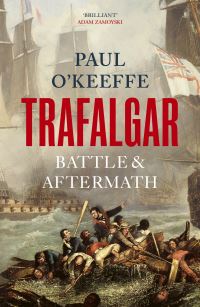
At or about 1.15 in the afternoon of 21 October 1805, Vice Admiral Horatio Nelson was struck by a 22-gramme, 15-millimetre French musket round fired down from the mizzen top of the Redoutable, a distance of some 70 feet to HMS Victory’s quarter deck. It nicked the edge of his epaulette, and passed diagonally down, through the material of his coat and into the left shoulder, fracturing the upper part of the scapula or shoulder blade, then the second and third rib. It pierced the left lung, dividing a branch of the pulmonary artery, and emerged to sever the spine, splintering the sixth and seventh vertebrae above and below as it crashed between. The soft lead ball – distorted by collisions with bone – ended its flight embedded in muscle two inches below the right scapula. In this fresh and visceral retelling of the battle of Trafalgar, Paul O’Keeffe traces the course of events both prior and subsequent to that fatal shot.
-
£22.00
In the heart of bustling European and American cities lies an overlooked yet vibrant corner of resilience, ingenuity and magic: our gardens. From pre-Industrial England to modern-day Washington, via the Paris Commune, Barrackia in pre-war Berlin, Soviet allotments in Estonia, the orchards tended by Black migrants in Washington and food forests in contemporary Amsterdam, ordinary people, working with each other and with nature, cultivated life in the unlikeliest of places. Over the past three hundred years, these tiny gardens, often born from necessity and shaped by precarity, immigration and environmental crisis, thrived by recycling nutrients, remedying contaminated soil and transforming how we think about our relationship to the earth. This title is a hymn to the most fertile agriculture in recorded human history, showing that it occurred not on farms but with little effort in small garden beds.
-
£22.00
In 2024, Gisèle Pelicot inspired and moved millions of people with her astonishing courage and dignity as she chose to waive her right to anonymity in her legal fight against her husband and the 50 men accused of her sexual assault. Gisèle Pelicot’s call for shame to change sides in cases of sexual abuse, and the power of the messages she has sent out to the world, have generated an extraordinary public response and moved both women and men all over the world.
-
£30.00
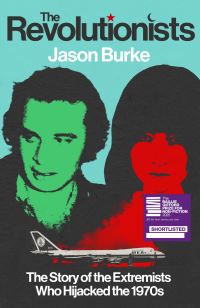
In the 1970s, a network of radical extremists terrorised the West with plane hijackings and hostage-takings. Among them were the beautiful young Leila Khaled with her jewellery made from grenade rings, the hard-drinking philanderer Carlos the Jackal sporting shades and open-neck shirts, and the radical leftists of the Baader-Meinhof Gang. They sought to liberate the Palestinians and overthrow western imperialism, orchestrating spectacularly violent attacks that held governments to ransom and the world gripped to their television screens. Drawing on decades of research, declassified archive material and original interviews with witnesses and participants, Jason Burke provides a masterful account of their exploits over the course of this dark decade.
-
£25.00
What if climate change isn’t an environmental challenge, but an energy challenge? In this visionary book, Dr Tim Gregory urges us to rethink the path to net zero. He argues that the solution to climate change lies not simply in replacing fossil fuels with renewables, but in fully embracing another energy source that emits zero carbon dioxide: nuclear power. Gregory dismantles the conventional wisdom that renewables are completely ‘green’ and ‘sustainable’, and exposes the limitations of wind and solar power, highlighting their unreliability and hidden fossil fuel dependency. He debunks myths surrounding nuclear waste and radiation, demonstrating that nuclear power is not only efficient, safe, and potent, but the most environmentally responsible way to harvest energy.
-
£25.00
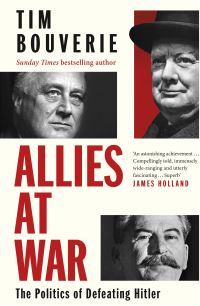
After the fall of France in June 1940, only Britain stood between Hitler and total victory. Desperate for allies, Winston Churchill did everything he could to bring the United States into the conflict, drive the Soviet Union and Nazi Germany apart and persuade neutral countries to resist German domination. By 1942, after the German invasion of Russia and the Japanese attack on Pearl Harbor, the British-Soviet-American alliance was in place. Yet it was an improbable and incongruous coalition, divided by ideology and politics and riven with mistrust and deceit. Churchill, Roosevelt and Stalin were partners in the fight to defeat Hitler, yet they were also rivals who disagreed on strategy, imperialism and the future of liberated Europe. Only by looking at their points of conflict, as well as of co-operation, are we able to understand the course of the war and world that developed in its aftermath.
-
£25.00
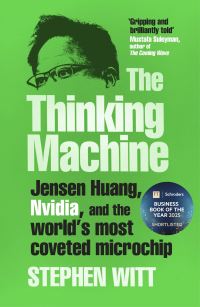
This is a riveting investigative account of Nvidia, the tech company that has exploded in value for its artificial intelligence computing hardware, and Jensen Huang, Nvidia’s charismatic, uncompromising CEO.
-
£22.00
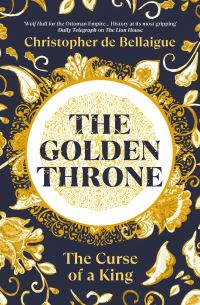
Istanbul, 1537. The greatest of the Ottoman Sultans is at his personal apogee and the pinnacle of world power. With both Christianity and Islam riven by schism, he is mighty enough to maul different enemies in different hemispheres at the same time. But a terrible crisis is building that will rip Suleyman’s family apart as his beloved wife Hurrem wages pitiless war against his first-born son, Mustafa, and the boy’s mother Mahidevran.
-
£25.00
Silicon Valley has lost its way. From the founding of the American republic through much of the twentieth century, our most brilliant engineering minds and the democratic state collaborated to advance world-changing technologies. The partnership ensured the West’s dominant place in the geopolitical order. But that relationship has now eroded, with perilous repercussions. The modern incarnation of Silicon Valley turned its focus to the consumer market, including the construction of elaborate online advertising and social media platforms. The market rewarded shallow engagement with the potential of technology, as startup after startup catered to the whims of capitalist culture with little interest in constructing the technology that would address our most significant challenges.
-
£25.00
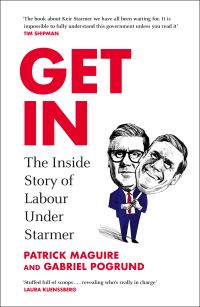
Drawing on their unrivalled access throughout the Labour party, the Times and Sunday Times investigative duo behind ‘Left Out’ now present the inside story of Labour’s transformation and general election under Starmer. This is the definitive telling of a momentous time for the party, focusing on Starmer’s relentless and single-minded pursuit of power and on the hidden turmoil as he expunged opponents and attempted to unite his party in the face of searingly divisive events. Richly peopled with all of the major figures of Labour present and past, and revealing who actually wields power in the party today, this is a must-read, warts-and-all picture of how Labour was ruthlessly transformed, how Starmer won Number 10 and who Britain’s government really is.
-
£25.00
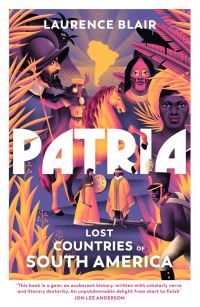
‘Lost Countries of South America’ is an adventurous, ambitious and dazzlingly original study of South America’s past that bridges travel writing, history and rich literary narrative.
-
£25.00
London, 1741. An actress mired in scandal plans her escape from an abusive husband. A penniless sea captain sets out to rescue the city’s abandoned infants. An African Muslim and former captive in the colonies becomes a celebrity. A grieving political dissident seeks release from his torment. And a great composer to kings – George Frideric Handel – now ill and straining to keep an audience’s attention, faces a decision that will secure his place in history. Evoking a pivotal moment at the birth of modernity, a time of fear, conspiracy and uprising, and featuring some of the most unusual and brilliant personalities of the eighteenth century, ‘Every Valley’ is a resonant story of hope in the darkness and the entangled lives that shaped a masterpiece.