Showing 97–108 of 165 resultsSorted by latest
-
£20.00
The Suez Crisis of 1956 was Britain’s twentieth-century nadir, the moment when the once superpower was bullied into retreat. In the immortal words of former US Secretary of State Dean Acheson, ‘Britain has lost an empire and not yet found a role.’ But the funny thing was, Britain had already found a role. It even had the costume. The leaders of the world just hadn’t noticed it yet. Butler to the World reveals how the UK took up its position at the elbow of the worst people on Earth: the oligarchs, kleptocrats and gangsters. We pride ourselves on values of fair play and the rule of law, but few countries do more to frustrate global anti-corruption efforts. We are now a nation of Jeeveses, snobbish enablers for rich halfwits of considerably less charm than Bertie Wooster. It doesn’t have to be that way.
-
£9.99
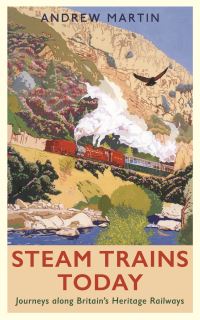
After the Beeching cuts of the 1960s, many railways were ‘rationalised’ and gradually shut down. Rural communities were isolated without ready access to the main lines and steam trains slowly gave way to diesel and electric traction. But some people were not prepared to let the romance of train travel die. Thanks to their efforts, many of these lines passed into community ownership and are now booming with new armies of dedicated volunteers. Andrew Martin goes out to meet these enthusiasts and find out just what it is about preserved railways which makes people so devoted.
-
£9.99
Brexit, the possible break-up of the UK, pandemics, this is a country in crisis. In crises the law sets the boundaries of what the government can and should do. But in a country without a written constitution such as the UK, the precise limits between legal obligation and convention can be hazy. Conventions, such as the Prime Minister being an MP, cannot be enforced in the same way as laws. What are the limits of law in politics? What is the relationship between law and the constitution? Is not having a constitution a hindrance or a help in time of crisis? Former supreme court judge Jonathan Sumption wrestles with past, current and potential crises that this increasingly divided country faces. From the role of the Supreme Court to the uses of referenda to the rise of nationalisms within the UK, Sumption exposes the subtleties, uses, and abuses of legal and judicial interventions.
-
£9.99
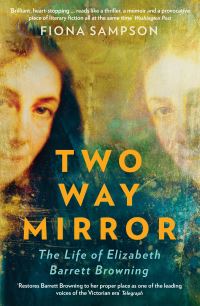
‘How do I love thee? Let me count the ways,’ Elizabeth Barrett Browning famously wrote, shortly before defying her family by running away to Italy with Robert Browning. But behind the romance of her extraordinary life stands a thoroughly modern figure, who remains an electrifying study in self-invention. Elizabeth was born in 1806, a time when women could neither attend university nor vote, and yet she achieved lasting literary fame. She remains Britain’s greatest woman poet, whose work has inspired writers from Emily Dickinson to George Eliot and Virginia Woolf. This biography incorporates recent archival discoveries to reveal the woman herself: a literary giant and a high-profile activist for the abolition of slavery who believed herself to be of mixed heritage; and a writer who defied chronic illness and long-term disability to change the course of cultural history.
-
£16.99
Tour the Roman Empire at its height with Marcus Sidonius Falx and his amanuensis, Dr Jerry Toner. Travelling east, Falx explores the great cultural centre of Athens before trekking into rural Asia (or Turkey as we know it), past the already ancient Luxor monuments in Roman Egypt, and by the Great Library of Alexandria. Travelling west across the breadbasket of the Empire, he journeys through Gaul (France) before crossing to Britannia, where he suffers the worst that provincial life has to offer. Falx provides practical advice on surviving all things travel: from pirates and shipwrecks to bedbugs and lousy food.
-
£12.99
The best way to understand what it was like to fight in the Second World War is to see it through the eyes of the soldiers who fought it. The South Notts Hussars fought at almost every major battle of the Second World War, from the Siege of Tobruk to the Battle of El Alamein and the D-Day Landings. Here, Peter Hart draws on detailed interviews conducted with members of the regiment, to provide both a comprehensive account of the conflict and reconstruct its most thrilling moments in the words of the men who experienced it. This is military history at its best: outlining the path from despair to victory, and allowing us to share in soldiers’ hopes and fears; the deafening explosions of the shells, the scream of the diving Stukas and the wounded; the pleasures of good comrades and the devastating despair at lost friends.
-
£9.99
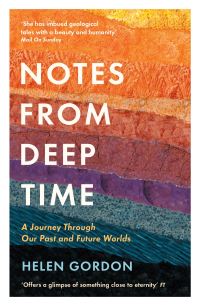
From the secret fossils of London to the 3-billion-year-old rocks of the Scottish Highlands, and from state-of-the-art Californian laboratories to one of the world’s most dangerous volcanic complexes hidden beneath the green hills of western Naples, set out on an adventure to those parts of the world where the Earth’s life-story is written into the landscape. Helen Gordon turns a novelist’s eye on the extraordinary scientists who are piecing together this planetary drama. She gets to grips with the theory that explains how it all works – plate tectonics, a breakthrough as significant in its way as evolution or quantum mechanics, but much younger than either, and still with many secrets to reveal.
-
£25.00
In 1922, three men – only one of whom had previously heard of ‘broadcasting’ – founded the BBC. In doing so, Arthur Burrows, Cecil Lewis, and John Reith set out to accomplish something utterly bold: using what had been a weapon of war – Marconi’s wireless – to remake culture for the good of humanity. In ‘The BBC: A People’s History,’ professor and historian David Hendy traces the BBC from its maverick beginnings through war, the creation of television, changing public taste, austerity and massive cultural change. The BBC has constantly evolved, developing from one radio station, to television, then multiple channels and now the competition with the Internet and streaming services. This is a history of a now global institution that defines Britain and created modern broadcasting; it is also a reflection of 100 years of British history.
-
£30.00
Long before Rome fell to the Ostrogoths in AD 476, a new city had risen to take its place as the beating heart of a late antique empire, the glittering Constantinople: New Rome. In this magisterial work, Professor Paul Stephenson charts the centuries surrounding this epic shift of power. He traces the cultural, social and political forces that led to the empire being ruled from a city straddling Europe and Asia, placing all into a rich natural and environmental context informed by the latest scientific research. Blending narrative with analysis, he shows how the city and empire of New Rome survived countless attacks and the rise of Islam. By the end, the wide world of linked cities had changed into a world founded on new ideas about government and God, art and war, and the very future of a Christian empire: Byzantium.
-
£9.99
If you were given one trillion dollars, to be spent in a year, on science, what would you do? It’s an unimaginably large sum, yet it’s also the total of the money held by the Norwegian oil investment fund alone, or the current valuations of Apple Computer and of Amazon. So it’s both huge and possible. But what could you achieve? You could eradicate malaria, for one, or end global poverty. You could start to colonise Mars. You could build a massive particle collider to explore the nature of dark matter like never before. You could mine asteroids, build quantum computers, develop artificial consciousness, or increase human lifespan. Or how about transitioning the whole world to renewable energy? Or preserving the rainforests? Or saving all endangered species? You could refreeze the melting Arctic, reverse climate change, cure all diseases, and even launch a new sustainable agricultural revolution.
-
£10.99
For millennia, Stoicism has been the ancient philosophy that attracts those who seek greatness, from athletes to politicians and everyone in between. And no wonder – its embrace of self-mastery, virtue and indifference to that which we cannot control has much to offer those grappling with today’s chaotic world. But who were the Stoics? In this book, Ryan Holiday and Stephen Hanselman offer a fresh approach to understanding Stoicism through the lives of the people who practiced it – from Cicero to Zeno, Cato to Seneca, Diogenes to Marcus Aurelius. Through short biographies of all the famous, and lesser-known, Stoics, this book will show what it means to live stoically, and reveal the lessons to be learned from their struggles and successes.
-
£10.99
Set out like a good lunchtime conversation, ‘Free Lunch’ will escort you through the mysteries of the economy. Your guides will be some of the greatest names in the field, including Smith, Marx and Keynes. This clever and witty introduction to economics is essential reading in these times of economic uncertainty, and far more satisfying than even the most gourmet banquet.