Showing 13–24 of 165 resultsSorted by latest
-
£18.99
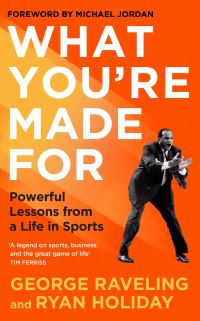
George Raveling knows all about beating the odds. A living legend, he has been a game-changing basketball coach, stood at the side of Martin Luther King Jr, mentored Michael Jordan and shaped the world of sports as a Director at Nike. But his life began in the shadow of segregation, death and mental illness. Here, he teams up with bestselling author Ryan Holiday to share the lessons drawn from his extraordinary life and career. This is not a memoir, but a blueprint for anyone who wants to overcome obstacles and achieve success on their own terms. You’ll find strategies for discovering purpose, insights on how to keep evolving and growing, advice for building meaningful connections, and tactics to compound daily victories into your greatest achievements. From finding a mentor to building a legacy, this book provides tools to not just navigate life, but to live it with intention and impact.
-
£18.99
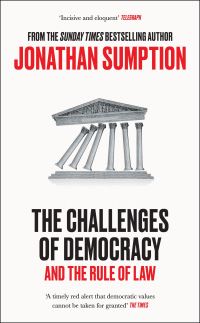
Across the globe, democracy is in crisis – in the UK alone, it has been rocked by Brexit, the pandemic and successive attempts by governments to bypass legal norms. But how did this happen, and where might we go from here? Jonathan Sumption cuts through the political noise with acute analysis of the state of democracy today – from the vulnerabilities of international law to the deepening suppression of democracy activism in Hong Kong, and from the complexities of human rights legislation to the defence of freedom of speech. Timely, incisive and wholly original, ‘The Challenges of Democracy’ applies the brilliance of ‘the cleverest man in Britain’ to the most urgent and far-reaching political issue of our day.
-
£22.00
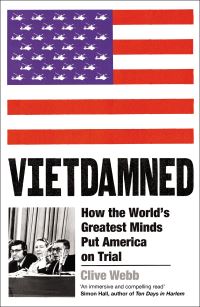
Guilty – the conclusion of many trials. But this verdict was unusual, delivered by a jury of the greatest minds of the twentieth century, among them Jean-Paul Sartre and Simone de Beauvoir, James Baldwin and Stokely Carmichael; and in the chair, legendary philosopher-mathematician Bertrand Russell. The defendant was unusual, too – the United States government. Award-winning historian Clive Webb lays bare the extraordinary true story of the 1967 Russell Tribunal and its attempt to hold the US government to account for atrocities in the Vietnam War. The revelations that came out of the tribunal shocked the world. Vietdamned is an eye-opening account of the anti-war movement, of cover-ups and abuses of government, and of the power (and limits) of celebrity.
-
£10.99
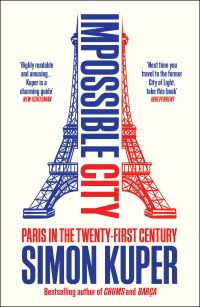
Simon Kuper has experienced Paris both as a human being and as a journalist. He has grown middle-aged there, eaten the croissants, taken his children to countless football matches on freezing Saturday mornings in the city’s notorious banlieues, and in 2015 lived through two terrorist attacks on his family’s neighbourhood. Over two decades of becoming something of a cantankerous Parisian himself, Kuper has watched the city change. This century, Paris has globalised, gentrified, and been shocked into realising its role as the crucible of civilisational conflict. Sometimes it’s a multicultural paradise, and sometimes it isn’t. This decade, Parisians have lived through a sequence of shocks: terrorist attacks, record floods and heatwaves, the burning of Notre Dame, the storming of the city by gilets jaunes, and the pandemic.
-
£9.99
As the nights draw in and the old year slips away, the haunting season begins. Twigs scrape at windowpanes in the darkness, mysterious footprints are found in the snow, and all sorts of mysteries, monsters and nastiness are in the offing. Bringing together ten classic tales of mystery, murder and mayhem from the greatest writers in the genre, ‘Murder by Candlelight’ will puzzle your mind and chill your blood in equal measure.
-
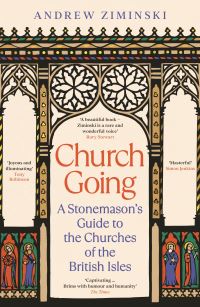
£25.00
Churches are many things to us – they are places of worship, vibrant community hubs and oases of calm reflection. To know a church is to hold a key to the past that unlocks an understanding of our shared history. Andrew Ziminski has spent decades as a stonemason and church conservator, acting as an informal guide to curious visitors. ‘Church Going’ is his handbook to the medieval churches of the British Isles, in which he reveals their fascinating histories, features and furnishings, from flying buttresses to rood screens, lichgates to chancels. Beautifully written and richly illustrated, it is a celebration of British architectural history.
-
£30.00
In 1825 the Stockton & Darlington company strode into history with the opening of the world’s first public steam railway. What the S&DR had pioneered soon picked up speed, transforming lives and landscapes, connecting far-flung corners of the nation and creating its own distinctive environments and working worlds. This ambitious and lavishly illustrated volume brings the story of Britain’s railways to life, spanning two centuries of achievement and change. Full of colour and incident, it is an exhilarating journey through time and space, revisiting favourite themes and introducing unfamiliar stories and places.
-
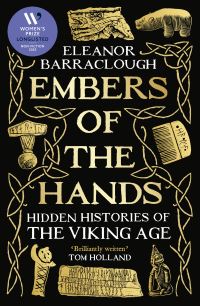
£25.00
Imagine a Viking, and a certain image springs to mind: a nameless, faceless warrior, leaping ashore from a longboat, and ready to terrorise the hapless local population of a northern European country. Yet while such characters define the Viking Age today, they were in the minority. This is the history of all the other people – children, enslaved people, seers, artisans, travellers, writers – who inhabited the medieval Nordic world. Encompassing not just Norway, Denmark and Sweden, but also Iceland, Greenland, parts of the British Isles, Continental Europe and Russia, this is a history of a Viking Age filled with real people of different ages, genders and ethnicities, as told through the traces that they left behind, from hairstyles to place names, love-notes to gravestones.
-
£25.00
For almost five million years, humans have been locked in a relationship with morality, inventing and reinventing the concepts of ‘Good’ and ‘Evil’, and weaving them into our cities, laws and customs. Morality is often associated with restraint and coercion; restriction and sacrifice; inquisition, confession and a guilty conscience. Joyless and claustrophobic, it is a device used to shames us into compliance. This impression is not entirely incorrect, but it is certainly incomplete. Using our past as a basis for a new understanding of our future, Hanno Sauer traces humanity’s fundamental moral transformations from our earliest ancestors through to the present day, when it seems we have never disagreed more over what it means to be good. Our current political disagreements may feel like the end of the world, but where will the evolution of morality take us next?
-
£14.99
Immerse yourself in London’s literary history with the most iconic writers from the London Review of Books
-
£10.99
‘The Singularity’ is what Silicon Valley calls the idea that, eventually, we will be overrun by machines that are able to take decisions and act for themselves. What no one says is that it happened before. A few hundred years ago, humans started building the robots that now rule our world. They are called states and corporations: immensely powerful artificial entities, with capacities that go far beyond what any individual can do, and which, unlike us, need never die. They have made us richer, safer and healthier than would have seemed possible even a few generations ago – and they may yet destroy us. ‘The Handover’ distils over 300 years of thinking about how to live with artificial agency.
-
£25.00
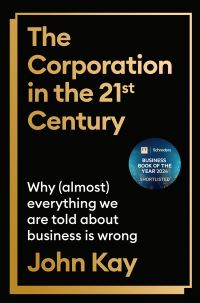
The goods and services provided by the leading companies of the 21st century appear on your screen, fit in your pocket, or occupy your head. Ownership of the means of production is a redundant concept. Workers are the means of production; increasingly, they take the plant home. Capital is a service bought from a specialist supplier with little influence over customer businesses. The professional managers who run modern corporations do not exert authority because they are wealthy; they are wealthy because they exert authority. John Kay’s incisive overhaul of our ideas about business redefines our understanding of successful commercial activity and the corporation – and describes how we have come to ‘love the product’ as we ‘hate the producer’.