Showing all 6 resultsSorted by latest
-
£25.00
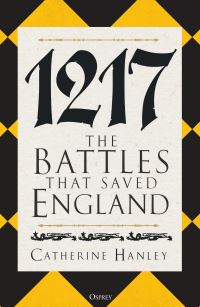
An engrossing history of the pivotal year 1217 when invading French forces were defeated and the future of England secured. In 1215 King John had agreed to the terms of Magna Carta, but he then reneged on his word, plunging the kingdom into war. The rebellious barons offered the throne to the French prince Louis and set off the chain of events that almost changed the course of English history. Louis first arrived in May 1216, was proclaimed king in the heart of London, and by the autumn had around half of England under his control. However, the choice of a French prince had enormous repercussions: now not merely an internal rebellion, but a war in which the defenders were battling to prevent a foreign takeover.
-
£10.99
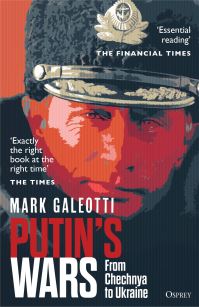
A new history of how Putin and his conflicts have inexorably reshaped Russia, including his devastating invasion of Ukraine. ‘Putin’s Wars’ is a timely overview of the conflicts in which Russia has been involved since Vladimir Putin became prime minister and then president of Russia, from the First Chechen War to the two military incursions into Georgia, the annexation of Crimea and the eventual invasion of Ukraine itself. But it also looks more broadly at Putin’s recreation of Russian military power and its expansion to include a range of new capabilities, from mercenaries to operatives in a relentless information war against Western powers. This is an engrossing strategic overview of a rejuvenated Russian military and the successes and failures on the battlefield.
-
£20.00
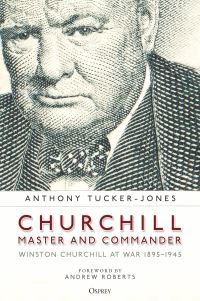
From his earliest days Winston Churchill was an extreme risk taker and he carried this into adulthood. Today, he is widely hailed as Britain’s greatest wartime leader and politician. Deep down though, he was foremost a warlord. Just like his ally Stalin, and his arch enemies Hitler and Mussolini, Churchill could not help himself and insisted on personally directing the strategic conduct of World War II. In this fascinating book, historian Anthony Tucker-Jones explores Churchill as a military commander, assessing how the military experiences of his formative years shaped him for the difficult military decisions he took in office.
-
£25.00
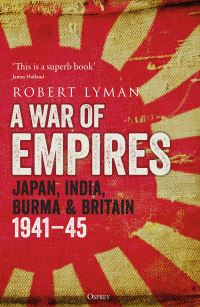
In 1941 and 1942 the British and Indian Armies were brutally defeated and Japan reigned supreme in its newly conquered territories throughout Asia. But change was coming. New commanders were appointed, significant training together with restructuring took place, and new tactics were developed. This book expertly retells these coordinated efforts and describes how a new volunteer Indian Army, rising from the ashes of defeat, would ferociously fight to turn the tide of war. But victory did not come immediately. It wasn’t until March 1944, when the Japanese staged their famed ‘March on Delhi’, that the years of rebuilding reaped their reward and after bitter fighting, the Japanese were finally defeated at Kohima and Imphal. This was followed by a series of extraordinary victories culminating in Mandalay in May 1945 and the collapse of all Japanese forces in Burma.
-
£20.00
Harald Sigurdsson burst into history as a teenaged youth in a Viking battle from which he escaped with little more than his life and a thirst for vengeance. But from these humble origins, he became one of Norway’s most legendary kings. The Last Viking is a fast-moving narrative account of the life of King Harald Hardrada, as he journeyed across the medieval world, from the frozen wastelands of the North to the glittering towers of Byzantium and the passions of the Holy Land, until his warrior death on the battlefield in England. Combining Norse sagas, Byzantine accounts, Anglo-Saxon chronicles, and even King Harald’s own verse and prose into a single, compelling story, Don Hollway vividly depicts the violence and spectacle of the late Viking era and delves into the dramatic events that brought an end to almost three centuries of Norse conquest and expansion.
-
£25.00
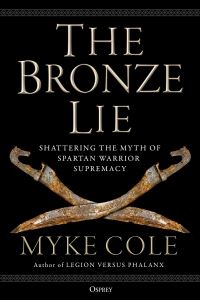
The Spartan hoplite enjoys unquestioned currency as history’s greatest fighting man. The last stand at Thermopylae made the Spartans legends in their own time, famous for their ability to endure hardship, control their emotions, and to never surrender – even in the face of impossible odds, even when it meant certain death. Was this reputation earned? Or was it simply the success of a propaganda machine that began turning at Thermopylae in 480 BC? Covering Sparta’s full classical history from the polis’ (city-state) foundation to its final subsumption by Rome in the first century BC, this book examines the myth of Spartan warrior supremacy, painting a very different picture of Spartan warfare – punctuated by frequent and heavy losses.