The penalty kick
£15.99‘Football is a simple game. Twenty-two men chase a ball for ninety minutes and at the end, the Germans win.’ Gary Lineker
We recently launched our new website and are facing a few teething issues. If you see any problems please contact us.
We recently launched our new website and are facing a few teething issues. If you see any problems please contact us.

Showing 1–12 of 15 resultsSorted by latest
‘Football is a simple game. Twenty-two men chase a ball for ninety minutes and at the end, the Germans win.’ Gary Lineker
‘North by Northwest isn’t about what happens to Cary Grant, it’s about what happens to his suit.’
Introduced by Lauren Child, Tiny Feet is an eclectic showcase of the most influential writing about children from the past three hundred years.
For fans of Oliver Sacks and Henry Marsh, a glimpse into the fascinating world of modern neurology by a leading expert in the field.As a trainee doctor, A. J. Lees was enthralled by his mentors: esteemed neurologists who combined the precision of mathematicians, the scrupulosity of entomologists, and the solemnity of undertakers in their diagnoses and treatments. For them, there was no such thing as an unexplained symptom or psychosomatic problem?no difficult cases, just interesting ones?and it was only a matter of time before all disorders of the brain would be understood in terms of anatomical, electrical, and chemical connections.Today, this kind of “holistic neurology” is on the brink of extinction as a slavish adherence to protocols and algorithms?plus a worship of machines?runs the risk of destroying the key foundational clinical skills of listening, observation, and imagination that have been at the he

In this light-hearted book, poet and gardener James Fenton describes a hundred plants he would choose to grow from seed. ‘It seemed a simple and interesting idea: what plants would you choose if starting a garden from scratch?’
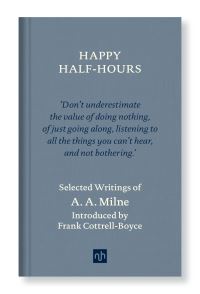
A delightful selection of articles by the ever-popular A.A. Milne, many of which haven’t been in print for decades. Introduced by the prize-winning children’s author Frank Cottrell Boyce. A treasure of a book.
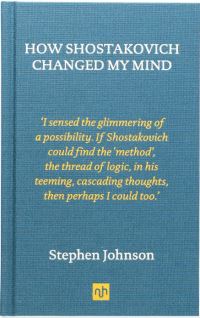
BBC music broadcaster Stephen Johnson explores the power of Shostakovich’s music during Stalin’s reign of terror, and writes of the extraordinary healing effect of music on sufferers of mental illness. Johnson looks at neurological, psychotherapeutic and philosophical findings, and reflects on his own experience, where he believes Shostakovich’s music helped him survive the trials and assaults of bipolar disorder.
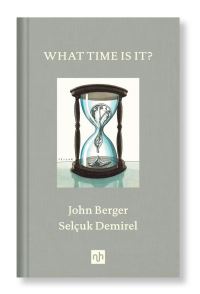
The last book that John Berger wrote was this precious little volume about time titled ‘What Time Is It?’, now posthumously published. Berger died before it was completed, but the text has been assembled and illustrated by his longtime collaborator and friend Selçuk Demirel, and has an introduction by Maria Nadotti.
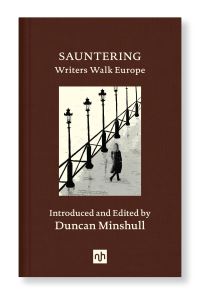
This latest collection of walking literature from Notting Hill Editions celebrates the allure of the Continent.On foot the world comes our way. We get close to the Continent’s alpine ranges, arterial rivers, expansive coastlines. Close to its ancient cities and mysterious thoroughfares; and close to the walkers themselves?the Grand Tourers and explorers, strollers and saunterers, on their hikes and quests, parades and urban drifts.Sauntering features sixty walker-writers?classic and current?who roam Europe by foot. Twenty-two countries are traversed. We join Henriette d’Angeville, the second woman to climb Mont Blanc; Nellie Bly roaming the trenches of the First World War; Werner Herzog on a personal pilgrimage through Germany; Hans Christian Andersen in quarantine; Joseph Conrad in Cracow; Rebecca Solnit reimagining change on the streets of Prague; and Robert Macfarlane dropping deep into underground Paris.Con
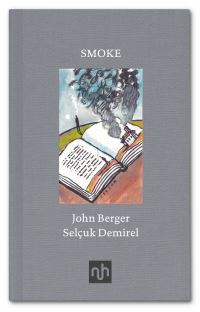
Following the success of ‘Cataract’, John Berger, one of the great soothsayers of seeing, joins forces again with Turkish illustrator Selçuk Demirel. This charming pictorial essay reflects on the cultural implications of smoking.
Michel de Montaigne is one of the founding fathers of the essay. Retreating to his châteaux to write (and often neglecting his estate duties), Montaigne pondered the great and small questions of life. Throught his essays he attempted to reach a deeper understanding of himself, and in doing so, touches on the greater human condition. Always curious, Montaigne ponders subjects as diverse as education, fear, reading and death. His ideas and the charm of his writing continue to captivate modern readers.
Reality versus fiction is at the heart of the current literary debate. We live in a world of docu-drama, the ‘real life’ story. Works of art, novels, films, are frequently bolstered by reference to the autobiography of the creator, or to underlying ‘fact’. Where does that leave the imagination? And who gets to define the parameters of ‘reality’ and ‘fiction’ anyway? Five writers debate the limits of materialism and realism, in art and literature – and offer a passionate defence of the alchemical imagination in a fact-based world.
No products in the basket.
Notifications