Showing 1–12 of 63 resultsSorted by latest
-
£18.99
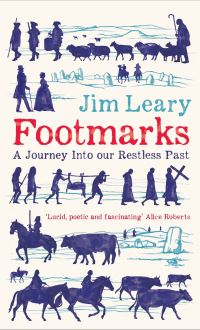
On paths, roads, seas, in the air, and in space – there has never been so much human movement. In contrast we think of the past as static, ‘frozen in time’. But archaeologists have in fact always found evidence for humanity’s irrepressible restlessness. Now, latest developments in science and archaeology are transforming this evidence and overturning how we understand the past movement of humankind. In this book, archaeologist Jim Leary traces the past 3.5 million years to reveal how people have always been moving, how travel has historically been enforced (or prohibited) by people with power, and how our forebears showed incredible bravery and ingenuity to journey across continents and oceans. With Leary to show the way, you’ll follow the footsteps of early hunter-gatherers preserved in mud, and tread ancient trackways hollowed by feet over time.
-
£25.00
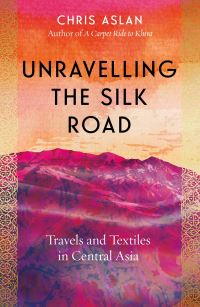
Three textile roads tangle their way through Central Asia. The famous Silk Road united east and west through trade. Older still was the Wool Road, of critical importance when houses made from wool enabled nomads to traverse the inhospitable winter steppes. Then there was the Cotton Road, marked by greed, colonialism and environmental disaster. At this intersection of human history, fortunes were made and lost through shimmering silks, life-giving felts and gossamer cottons. Chris Aslan, who has spent fifteen years living and working in the region, expertly unravels the strands of this tangled history.
-
£18.99
Are you getting enough? Ben Aitken wasn’t. Increasingly flat and decreasingly zen, he knew that something had to change. So he joined a lawn bowls club. About a week later, he continued his assault on the doldrums by taking a cheerleading class. Then – with an almost entirely reformed selfhood winking appealingly on the horizon – he went cold-water swimming and was back to square one. Despite the inevitable setbacks and missteps, it was becoming clear to Aitken that the very pursuit of fun was a great route to feeling less naff. And so he made a vow to go after the f-stuff with as much gusto as he could muster. He filled his calendar with a plethora of potentially pleasurable pursuits. Although the results were mixed, Aitken’s year of making merry left him feeling undoubtedly better. Which invites the question: if fun is such a reliable mood-swinger, shouldn’t we be having more of of it?
-
£18.99
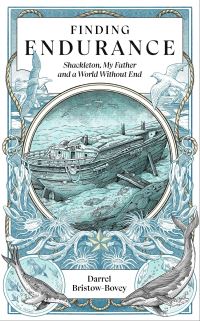
Since the discovery of the wreck of Ernest Shackleton’s ship Endurance on the bed of the Antarctic ocean, the world has been enthralled anew by one of the greatest stories of all time. South African writer Darrel Bristow-Bovey, himself a Shackleton aficionado, revisits this dramatic event, which managed to sweep the tide of anger and rancour off the timelines and front pages of the world. He asks how so many ordinary people, who don’t know a nunatak from a barquentine, were so moved at the finding of a small wooden ship once sailed by a half-forgotten Irishman? In re-examining the story and its players, he presents new details and a new understanding of the courage and hardship of the Endurance voyage, and reminds us of how extraordinary humans can be.
-
£25.00
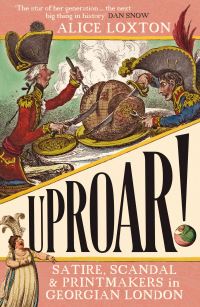
London, 1772: a young artist called Thomas Rowlandson is making his way through the grimy backstreets of the capital, on his way to begin his studies at the Royal Academy Schools. Within a few years, James Gillray and Isaac Cruikshank would join him in Piccadilly, turning satire into an artform, taking on the British establishment, and forever changing the way we view power. Set against a backdrop of royal madness, political intrigue, the birth of modern celebrity, French revolution, American independence and the Napoleonic Wars, ‘Uproar!’ follows the satirists as they lampoon those in power, from the Prince Regent to Georgiana, Duchess of Devonshire. Their prints and illustrations deconstruct the political and social landscape with surreal and razor-sharp wit, as the three men vie with each other to create the most iconic images of the day.
-
£12.99
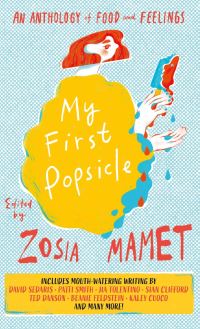
This is a riotous, mouth-watering celebration of jelly, mac and cheese, donuts, the best sandwich in the entire world – and much more. Of all the essentials for survival: oxygen, water, sleep and food, only food is a vast treasure trove of memory and of sensory experience. Food is a portal to culture, to times past, to disgust, to comfort, to love: no matter one’s feelings about a particular dish, they are hardly ever neutral. In ‘My First Popsicle’, Zosia Mamet has curated some of the most prominent voices in art and culture to tackle the topic of food in its elegance, its profundity and its incidental charm.
-
£16.99
Keith Gessen had always assumed that he would have kids, but couldn’t imagine what parenthood would be like, nor what kind of parent he would be. Then, one Tuesday night in early June, Raffi was born, a child as real and complex and demanding of his parents’ energy as he was singularly magical. Fatherhood is another country: a place where the old concerns are swept away, where the ordering of time is reconstituted, where days unfold according to a child’s needs. Like all parents, Gessen wants to do what is best for his child. But he has no idea what that is. Written over the first five years of Raffi’s life, ‘Raising Raffi’ examines the profound, overwhelming, often maddening experience of being a dad.
-
£10.99
Surprisingly, time travel is not forbidden by the laws of physics – and John Gribbin argues that if it is not impossible then it must be possible. Gribbin illustrates the possibilities of time travel by comparing familiar themes from science fiction with their real-world scientific counterparts, including Einstein’s theories of relativity, black holes, quantum physics, and the multiverse, illuminated by examples from the fictional tales of Robert Heinlein, Larry Niven, Carl Sagen and others. The result is an entertaining guide to some deep mysteries of the universe which may leave you wondering whether time actually passes at all, and if it does, whether we are moving forwards or backwards.
-
£25.00
From the mysteries of the subatomic world to the curious property of water that makes our planet inhabitable, master of popular science John Gribbin delves into the astonishing facts that underlie our existence. Some aspects of the quantum world really do seem impossible to ‘common sense’, but have been proved correct by experiments. Other features of the universe appear obvious, such as the fact that atoms are mostly empty space. But this familiarity hides the truly amazing truths underpinning these observations. And some things merely seem improbable but are also hiding a deep truth, such as the fact that the moon and sun look the same size as viewed from Earth.
-
£20.00
To some, science is simply a means to an end; to others it is an almost spiritual meditation on theories and formulae. ‘The Curious World of Science’ embraces both views and much more besides. Focusing on the human endeavours at the heart of science, it presents a miscellany of essential classifications, intriguing biographies, amusing curiosities, and irresistible trivia.
-
£12.99
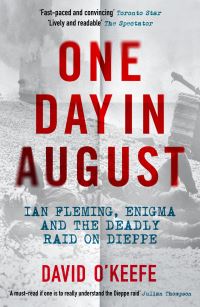
In less than six hours in August 1942, nearly 1000 British, Canadian and American commandos died in the French port of Dieppe in an operation that for decades seemed to have no real purpose. Was it a dry-run for D-Day, or perhaps a gesture by the Allies to placate Stalin’s impatience for a second front in the west? Historian David O’Keefe uses hitherto classified intelligence archives to prove that this catastrophic and apparently futile raid was in fact a mission, set up by Ian Fleming of British Naval Intelligence as part of a ‘pinch’ policy designed to capture material relating to the four-rotor Enigma Machine that would permit codebreakers like Alan Turing at Bletchley Park to turn the tide of the Second World War.
-
£14.99
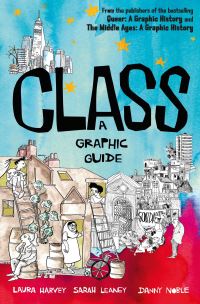
What do we mean by social class in the 21st century? University of Brighton sociologists Laura Harvey and Sarah Leaney and award-winning comics creator Danny Noble present an utterly unique, illustrated journey through the history, sociology and lived experience of class. What can class tell us about gentrification, precarious work, the role of elites in society, or access to education? How have thinkers explored class in the past, and how does it affect us today? How does class inform activism and change? This title challenges simplistic and stigmatising ideas about working-class people, discusses colonialist roots of class systems, and looks at how class intersects with race, sexuality, gender, disability and age.