Showing all 7 resultsSorted by latest
-
£11.99
The world of work is full of ideas. Some are useful, shaping what we do and the way we do it – but it can often be hard to sort the wheat from the chaff. When ideas really do break new ground and change our approach, they can help all of us to be better, happier and more productive. The trick is to know which ones offer the most reliable guide, and how they can be used to best effect. By summarising and explaining the best of this thinking, ’50 Ideas that Changed the World of Work’ is both digest and route map, an invaluable guide to navigating the world of work today.
-
£10.99
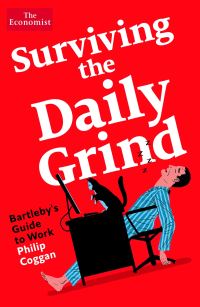
We spend a lot of our time at work and would be depressed with nothing to do. But when it gets to Monday, many of us are already longing for the weekend and the prospect of escape. How did work become so tedious and stressful? And is there anything we can do to make it better? Based on his popular Economist Bartleby column, Philip Coggan rewrites the rules of work to help us survive the daily grind. Ranging widely, he encourages us to cut through mindless jargon, pointless bureaucracy and endless meetings to find a new, more creative – and less frustrating – way to get by and get on at work.
-
£10.99
What was history’s biggest empire? Or the tallest building of the ancient world? What was the average life expectancy in medieval Byzantium? The average wage in Old Kingdom Egypt? Where did scientific writing first emerge? What was the bloodiest ritual human sacrifice ever? We are used to thinking about history in terms of stories. Yet we understand our own world through data: vast arrays of statistics that reveal the workings of our societies. So, join the radical historians Peter Turchin and Dan Hoyer for a dive into the numbers that reveal the true shape of the past. Drawing on their own Seshat project, a staggeringly ambitious attempt to log each piece of demographic and econometric information that can be reliably estimated for every society that has ever existed, this book does more than tell the story of the past: it shows you the large-scale patterns.
-
£9.99
The more we ponder, the odder the world can seem. Why are coups making a comeback? What counts as a journey into space? Which countries cheat the most in athletics? Is the tale of the difficult second novel fact or fiction? The keen minds at The Economist contemplate all these and more in their quest for the globe’s most extraordinary and up-to-date quandaries and conundrums, brought together in this latest annual compilation of the oddest and the most mind-boggling. Amaze and delight everyone you know with bizarre facts and headscratchers that show the world is even stranger than we might have thought.
-
£10.99
The world today rests on increasingly unstable fault lines. From the conflict in Ukraine or fresh upheavals in the Middle East to the threats posed to humanity by a global pandemic, climate change and natural disasters, the world’s danger zones once again draw their battle lines across our hyperconnected, yet fragmented, globe. Join veteran Economist journalist John Andrews as he analyses the old enmities and looming collisions that underlie conflict in the 21st century. Region by region, discover the causes, contexts, participants and likely outcomes of every globally significant struggle now underway.
-
£14.99
We spend a lot of our time at work and would be depressed with nothing to do. But when it gets to Monday, many of us are already longing for the weekend and the prospect of escape. How did work become so tedious and stressful? And is there anything we can do to make it better? Based on his popular Economist Bartleby column, Philip Coggan rewrites the rules of work to help us survive the daily grind. Ranging widely, he encourages us to cut through mindless jargon, pointless bureaucracy and endless meetings to find a new, more creative – and less frustrating – way to get by and get on at work.
-
£10.99
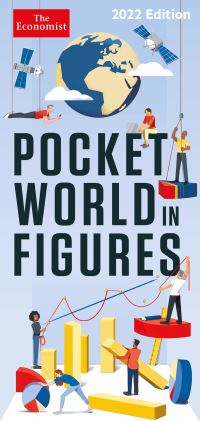
For nearly thirty years, ‘Pocket World in Figures’ has been the indispensable handbook on the state of the world. Where else would you find out, in a single volume, that Zambia is the most entrepreneurial country on earth, that Qatar uses the most energy per head of population and that the Virgin Islands has the fourth highest murder rate of any region in the world? The new edition includes data from over 180 countries, presented in a series of rankings and country profiles. Updated, revised and expanded each year to include new rankings and features, it also includes detailed statistical profiles of more than sixty-five of the world’s major economies, the euro area and the world itself.

 Short History Of Nearly Everything
  Heroes Of Olympus The Lost Hero