Showing 1–12 of 20 resultsSorted by latest
-
£12.99
From France’s brilliant female impersonator and secret agent to the infamous Cambridge spy ring, John Hughes-Wilson offers a nerve-shredding insight into the work – and treacheries – of the spies who shaped history. From WWII’s cryptography to Elizabeth I and the hunt for Osama bin Laden, the hidden hand of intelligence is exposed behind every critical decision.
-
£12.99
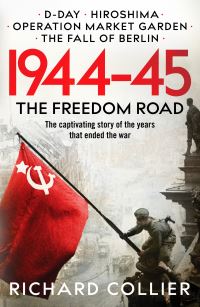
Going into 1944, the Allies knew the tide was turning in their favour. But they still faced a monumental task to get to victory. From the beaches of Normandy on D-Day to those of the Pacific stormed by American marines, from the air drops at Arnhem and the Battle of the Bulge, to the final dropping of the atomic bomb on Hiroshima and Nagasaki, from the sacking of Berlin to the delicate peace that followed, this is a gripping and impeccably researched account of two years that forever changed the world.
-
£12.99
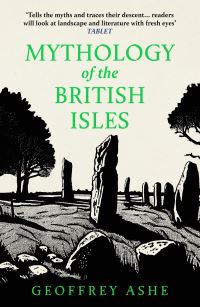
Recounting stories and legends from the dark centuries of British prehistory to the 9th century AD, Ashe shows how they interrelate and take on fresh significance from historical and archaeological research.
-
£12.99
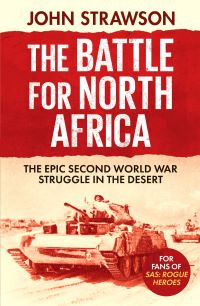
In showing how the nature and conduct of battles developed during this three-year desert campaign, John Strawson brings together the strategic considerations, the changing tactics and the impressions of those who did the actual fighting. The soldiers of many nations give their impressions.
-
£10.99
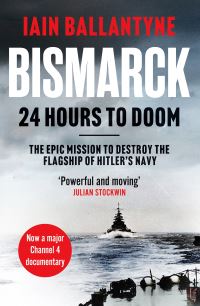
This is the story of Bismarck’s fateful final 24 hours on 26/27 May 1941: the finale of the hunt and the culminating brutal close-quarters battle as Bismarck makes a desperate bid to escape the enemy. Using eyewitness accounts of Royal Navy sailors, Royal Marines and Swordfish torpedo-bomber aviators – including searing testimony gleaned by the author during unique interviews with a ‘band of brothers’ who were in the thick of the action – Ballantyne brings one of the Second World War’s most dramatic events thundering to life. He also draws on new research in museum archives and other accounts from both the British and German side, to present a multi-dimensional, cinematic telling of a legendary episode in naval combat history.
-
£12.99
One of the greatest and most terrible years in world history. ‘This war has now assumed the character’, wrote Benito Mussolini, before 1941 was six months old, ‘of a war between two worlds’, and the Italian dictator had rarely predicted more truly. Before the year had ended, following Hitler’s surprise assault on Russia and the Japanese attack on Pearl Harbour, thirty-seven nations were engaged in an all-out war reminiscent of Armageddon, ‘the battle of that great day of God Almighty’. Richard Collier’s narrative spans both this entire, devastating year, as well as the events that led up to it.
-
£11.99
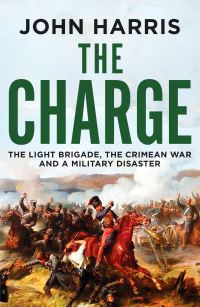
Cannon to the left of them; cannon to the right of them. The legend of an extraordinary defeat brought vividly to lifeThe cavalry charge of the Light Brigade in the Crimean War remains one of the most iconic disasters in British military history. Here John Harris casts a fresh view on the subject, rejecting conventional wisdom. The calamity was, he argues, brought about by something much more complex than the usually suspected cause: internal rivalry and incompetence.
-
£11.99
James Lucas was an acclaimed military historian who worked for many years at the Imperial War Museum. He is the author of numerous bestselling books about the Second World War.
-
£10.99
1944 was a year of trial for the German Army. While the Allies were preparing to invade the Third Reich from the west, Stalin was set on a massive offensive to liberate the last remaining areas of Soviet territory still held by the Germans. Hitler was determined to hold fast. His muddled strategic thinking nullified the undoubted operational ability of his generals, and disaster was the inevitable result. This book is a gripping analysis of the Soviet campaign to capture Byelorussia, the German attempts to counter it, and the final, terrible collapse of Army Group Centre, inflicting even greater losses on the Germans than their earlier defeat at Stalingrad. It was a catastrophe of unbelievable proportions: 28 of 34 divisions, over 300,000 men, were lost. Hitler’s war effort was doomed and broken.
-
£12.99
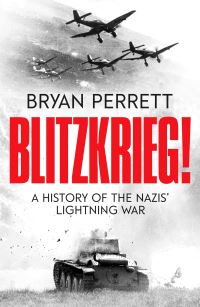
If Hitler had failed in his invasion of Western Europe in 1940 he could well have been assassinated by a group of his senior officers. But he decisively defeated the combined efforts of the British, French, Dutch and Belgian armies in a matter of days. The technique employed was known as Blitzkrieg or Lightning War. Nothing would be the same again. Although strands were clearly apparent by 1918, it was perfected through the interwar years before being deployed with terrifying effect by the Nazis at the outbreak of the Second World War. Eventually, other combatants would employ similar methods and the tide would turn. As well as discussing the developing nature of tactics, fighting vehicles and aircraft from 1918 onwards, the author examines the potent workings of Blitzkrieg in-depth, describing not only its obvious triumphs but also its fatal flaws.
-
£10.99
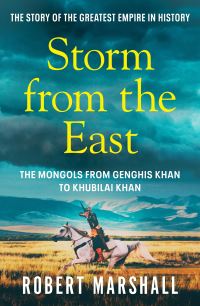
Genghis Khan left an empire more than twice the size of Alexander’s: his successors went on to conquer and govern an area stretching from Korea to the River Danube. How did a band of nomadic herdsmen achieve so much, so fast? Despite these stunning achievements, many writers dismiss the Mongols as just ferocious barbarians. This book sets the record straight. The epic starts in 1206 – when Genghis became master of ‘all the people with felt tents’ and an unknown tribe took the first steps towards world domination – and ends with the empire’s decline and fall, after Khubilai Khan’s triumphant unification with China. Robert Marshall describes their devastating invasions, including that of feudal Europe and Christendom’s clumsy attempts to understand and fend off these legendary warriors.
-
£10.99
Robert Marshall is a writer and producer. He spent 20 years at the BBC, ran independent production companies, pioneered live screening of the performing arts and was Executive Producer for Shakespeare’s Globe. He has returned to his native Australia and now lectures at Curtin University, and is still writing.