Racing green
£10.99‘Racing Green’ is the story of how motorsport science has become smarter and more environmentally friendly, and how these developments on the track are changing the world.
We recently launched our new website and are facing a few teething issues. If you see any problems please contact us.
We recently launched our new website and are facing a few teething issues. If you see any problems please contact us.

Showing all 8 resultsSorted by latest
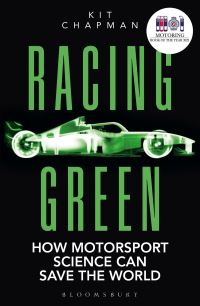
‘Racing Green’ is the story of how motorsport science has become smarter and more environmentally friendly, and how these developments on the track are changing the world.
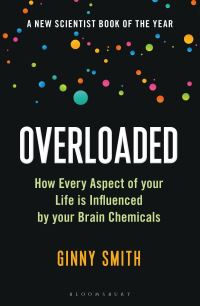
From adrenaline to dopamine, our lives are shaped by the chemicals that control us. They are the hormones and neurotransmitters that our brains run on, and this book looks at the roles they play in all aspects of our experiences, from how we make decisions, who we love, what we remember to basic survival drives such as hunger, fear and sleep. Author Ginny Smith explores what these tiny molecules do: what roles do cortisol and adrenaline play in memory formation? How do hormones and neurotransmitters affect the trajectory of our romantic relationships? Ginny meets scientists at the cutting-edge of brain chemistry research who are uncovering unexpected connections between these crucial chemicals. An eye-opening route through the remarkable world of neuro-transmitters, ‘Overloaded’ unveils the chemicals inside each of us that touch every facet of our lives.
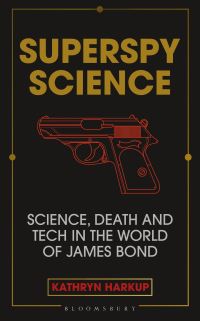
Ian Fleming’s series of novels based on the adventures of the secret service agent James Bond have thrilled and delighted readers since Casino Royale was published in 1953. And when the film of Dr No was released in 1962, Bond quickly became one of the world’s favourite secret agents. Science and technology have always been central to the plots than make up the world of Bond, and in this book, Kathryn Harkup explores these themes. Naturally, there are 007 chapters, covering the full range of Bond’s exploits, and the arms, technologies, tactics and downfalls of his various foes, from the practicalities of building a volcano-based lair, to whether being covered in gold paint really will kill you, and – if your plan is to take over the world – whether it is better to use bacteria, bombs, or poison.
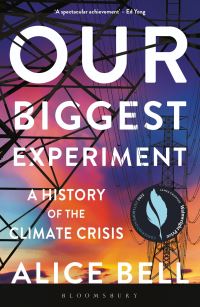
‘Our Biggest Experiment’ tells the story of how the world became addicted to fossil fuels, how we discovered that electricity may be our saviour and how renewable energy is far from a 20th century discovery. Dr Alice Bell cuts through the jargon and the jumble of numbers to present a pacey and approachable telling of how we are getting to grips with what is now the defining issue of our time. She doesn’t sugar-coat the situation – the potential consequences for us and for future generations are genuinely disturbing – but she also makes the very salient point that it is amazing that we noticed it in the first place. The message she gives is ultimately hopeful: harnessing the ingenuity and intelligence that has driven the history of climate change research can mean a more sustainable and bearable future for humanity.
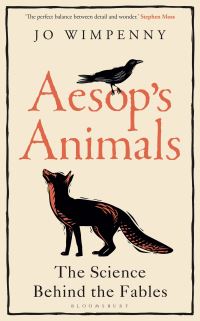
Despite being conceived over two and a half thousand years ago, Aesop’s Fables are still passed from parent to child today, and are embedded in our collective consciousness. The morals we learnt from these tales still inform our judgements, but have they influenced our views of the animal protagonists as well? And if so, is there any truth behind the stereotypes? In ‘Aesop’s Animals’, zoologist Jo Wimpenny turns a critical eye to the fables and ask whether there is any scientific truth to Aesop’s portrayal of his animals. She brings the tales into the twenty-first century, introducing the latest scientific research on some of the most fascinating topics in animal behaviour. Each chapter focuses on a different fable and a different topic in ethology, including future planning, tool use, self-recognition, cooperation and deception.
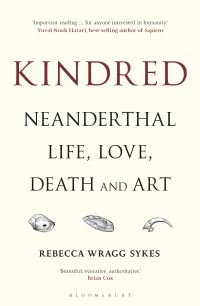
Our perception of the Neanderthals has undergone a metamorphosis since their discovery 150 years ago, from the losers of the human family tree to A-list hominins. Spanning scientific curiosity and popular cultural fascination means that there is a wealth of coverage in the media and beyond – but do we get the whole story? The reality of 21st century Neanderthals is complex and fascinating, yet remains virtually unknown and inaccessible outside the scientific literature. In ‘Kindred’, Neanderthal expert Becky Wragg Sykes shoves aside the cliché of the rag-clad brute in an icy wasteland, and reveals the Neanderthal you don’t know, who lived across vast and diverse tracts of Eurasia and survived through hundreds of thousands of years of massive climate change.
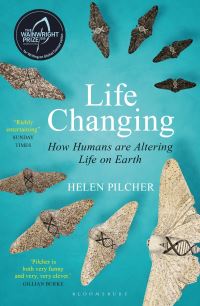
For the last three billion years or so, life on Earth has been shaped by natural forces. Through climate change, humans have now affected even the most remote environments and their inhabitants, and studies suggest that through our actions we are forcing some animals to evolve at breakneck speed to survive. Whilst some are thriving, others are on the brink of extinction, and for others the only option is life in captivity. Today, it’s not just the fittest that survive; sometimes it’s the ones we decide to let live. In this book, Helen Pilcher considers the many ways that we’ve shaped the DNA of the animal kingdom and in so doing, altered the fate of life on earth. In her post-natural history guide, she invites us to meet key species that have been sculpted by humanity, as well as the researchers and conservationists who create, manage and tend to these post-natural creations.
No products in the basket.
Notifications