Cypria
£10.99An evocative and lyrical history of Cyprus and the Mediterranean.

Showing 1–12 of 45 resultsSorted by latest
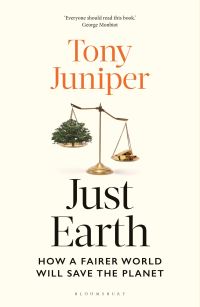
Environmentalist Tony Juniper CBE reveals in this eye-opening book that green technologies won’t work until we defeat the main obstacle blocking climate action – inequality.
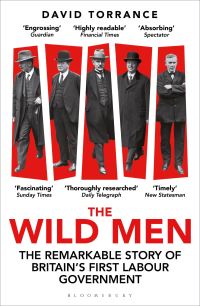
The incredible story of the first Labour administration and the ‘wild men’ who shook up the British establishment, with a fully updated new Preface.
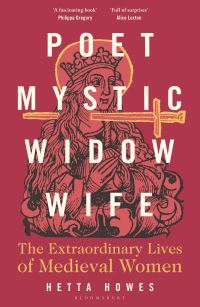
A spectacular, vivid, groundbreaking work of history which takes us into the mind and lives of medieval women.
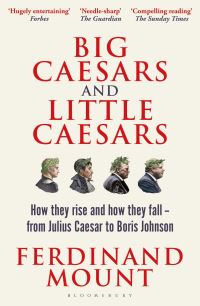
Who said that dictatorship was dead? The world today is full of strong men and their imitators. Caesarism is alive and well. Yet in modern times it’s become a strangely neglected subject. Ferdinand Mount opens up a fascinating exploration of how and why caesars seize power and why they fall. There is a comforting illusion shared by historians and political commentators from Fukuyama back to Macaulay, Mill and Marx, that history progresses in a nice straight line towards liberal democracy or socialism, despite the odd hiccup. In reality, every democracy, however sophisticated or stable it may look, has been attacked or actually destroyed by a would-be caesar, from Ancient Greece to the present day. Marx was wrong. This Caesarism is not an absurd throwback, it is an ever-present danger.
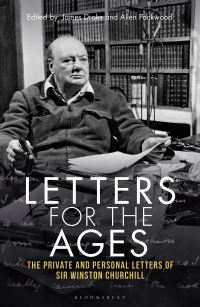
Here are some of the best of Churchill’s letters, many of a more personal and intimate nature, presented in chronological order, with a preface to each letter explaining the context. The recipients include a vast range of people, including his schoolmaster, his American grandmother and former President Eisenhower. They are taken from within the Churchill Archive in Cambridge, where there is a mass of Churchill’s correspondence. Several of the letters included have never appeared in book form before. Winston Churchill has become an iconic figure greatly loved the world over, but maybe especially these days in the USA. Churchill understood the power of words and he used his writing to sustain and complement his political career, publishing over 40 books and receiving the Nobel Prize for Literature in 1953. This volume concentrates on his more intimate words.
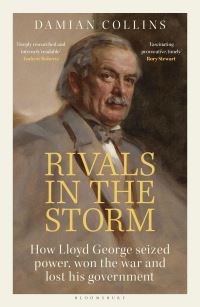
Brought up in rural North Wales, David Lloyd George attended neither a grand school nor ancient university. He was very much an outsider. And yet he rose through the ranks with charisma, fierce intelligence and fighting spirit to become, as Churchill put it at his funeral, a man who ‘stood, when at his zenith, without a rival’. But his rise was not without its hardships, and in Rivals in the Storm, experienced MP and author Damian Collins focuses on the impact of Lloyd George’s personality on other leading politicians, in driving progressive reforms through government, changing the course of the First World War to lead the Allies to victory, and cementing Britain’s alliance with America.
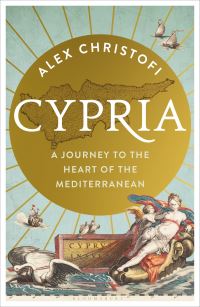
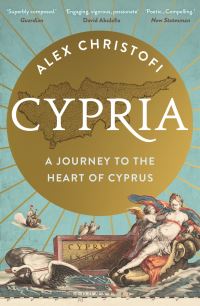
Think of a place where you can stand at the intersection of Christian and Arab cultures, at the crossroads of the British, Ottoman, Byzantine, Roman and Egyptian empires; a place marked by the struggle between fascism and communism and where the capital city is divided in half as a result of bloody conflict; where the ancient olive trees of Homer’s time exist alongside the undersea cables which link up the world’s internet. British Cypriot writer Alex Christofi writes a deeply personal, lyrical history of the island of Cyprus, from the era of goddesses and mythical beasts to the present day.
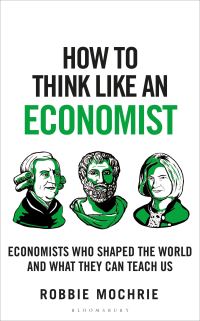
Capturing the essence of history’s most influential economists in enjoyable and illuminating biographical sketches, this book shows how the great economic thinkers are still relevant today. We live in the economy – and we are part of it. Living through a pandemic, governments had to work out how to put economies into a deep freeze without destroying them. In explaining how economic thinking is indispensable to tackling these huge problems, this book is a sure-footed guide, spanning Aristotle’s ideas about restraining consumption, Adam Smith’s thinking about the importance of moral character for sustained economic development, and Esther Duflo’s ongoing work to help the world’s poorest communities lift themselves out of poverty. It shows how great economic thinkers have enabled us to see the world differently, and how we can make it better.
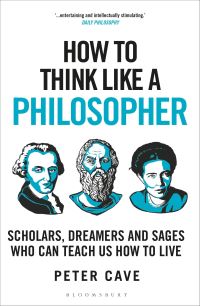
In showing how the great philosophers of human history lived and thought – and what they thought about – the popular philosopher Peter Cave provides an accessible and enjoyable introduction to thinking philosophically and how it can change our everyday lives. As well as displaying optimists and pessimists, believers and non-believers, the book displays relevance to current affairs, from free speech to abortion to the treatment of animals to our leaders’ moral character. In each brief chapter, Cave brings to life these often prescient, always compelling philosophical thinkers, showing how their ways of approaching the world grew out of their own lives and times and how we may make valuable use of their insights today. Now, more than ever, we need to understand how to live, and how to understand the world around us. This is the perfect guide.
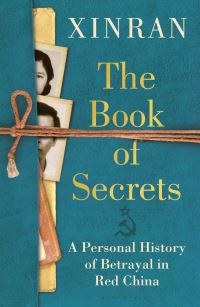
The story of a family in modern China with a history of deceit, betrayal and political intrigue, and the communist party’s long shadow over them, from the Cultural Revolution to today.
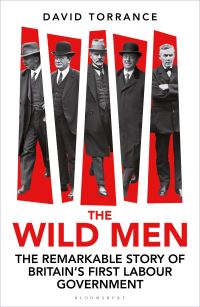
In 1923, four short years since the end of the First World War, and after the passing of the Act which gave all men the vote, an inconclusive election result and the prospect of a constitutional crisis opened the door for a radically different sort of government: men from working-class backgrounds who had never before occupied the corridors of power at Westminster. ‘The Wild Men’ tells the story of that first Labour administration – its unexpected birth, fraught existence, and controversial downfall – through the eyes of those who found themselves in the House of Commons, running the country for the people. Blending biography and history into a compelling narrative, David Torrance reassesses the UK’s first Labour government a century after it shook up a British establishment still reeling from the War – and how the establishment eventually fought back.
No products in the basket.
Notifications