Anaximander
£16.99Carlo Rovelli restores Anaximander to his place in the history of science by carefully reconstructing his theories from what is known to us and examining them in their historical and philosophical contexts.

Showing 73–84 of 167 resultsSorted by latest
Carlo Rovelli restores Anaximander to his place in the history of science by carefully reconstructing his theories from what is known to us and examining them in their historical and philosophical contexts.
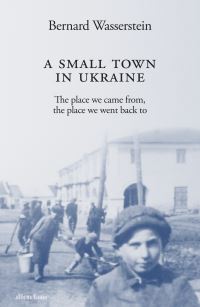
Decades ago, the historian Bernard Wasserstein set out to uncover the hidden past of the town 40 miles west of Lviv where his family originated: Krakowiec (Krah-KOV-yets). In this work he recounts its dramatic and traumatic history. ‘I want to observe and understand how some of the great forces that determined the shape of our times affected ordinary people.’ The result is an exceptional, often moving book. Wasserstein traces the arc of history across centuries of religious and political conflict, as armies of Cossacks, Turks, Swedes and Muscovites rampaged through the region.
‘The Big Con’ describes the confidence trick the consulting industry performs in contracts with hollowed-out and risk-averse governments and shareholder value-maximizing firms. To make matters worse, our best and brightest graduates are often redirected away from public service into consulting. In all these ways, the Big Con weakens our businesses, infantilises our governments and warps our economies. Mazzucato and Collington expertly debunk the myth that consultancies always add value to the economy. With a wealth of original research, they argue brilliantly for investment and collective intelligence within all organisations and communities, and for a new system in which public and private sectors work innovatively for the common good. We must recalibrate the role of consultants and rebuild economies and governments that are fit for purpose.
‘It’s OK To Be Angry About Capitalism’ presents a vision of what would be possible if the political revolution took place. If we would finally recognise that economic rights are human rights, and work to create a society that provides them. This isn’t some utopian fantasy; this is democracy as we should know it. Is it really too much to ask?
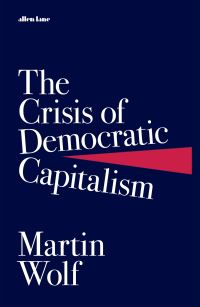
Liberal democracy is in recession and authoritarianism is on the rise. The ties that ought to bind open markets to free and fair elections are being strained and spurned, even in democracy’s notional heartlands. Around the world, powerful voices argue that capitalism is better without democracy; others that democracy is better without capitalism. This book is a forceful rejoinder to both views, offering a deep and lucid assessment of why the marriage between capitalism and democracy has grown so strained and making clear why a divorce would be an almost unthinkable calamity. Wolf argues that for all its recent failings – slowing growth and productivity, increasing inequality, widespread popular disillusion – democratic capitalism remains the best system and that citizenship is not just a slogan or a romantic idea; it’s the only concept that can save us.
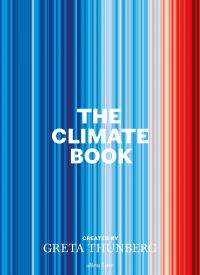
It seems like an impossible task: secure a safe future for life on Earth, at a scale and speed that the world has never seen, in the face of vast and powerful forces – not just oil tycoons and governments, but the changing climate system itself. The odds are against us, and we are running out of time. But it doesn’t have to be this way. Around the world, geophysicists and mathematicians, oceanographers and meteorologists, engineers, economists, psychologists and philosophers have been using their expertise to develop a deep understanding of the crises we face. Greta Thunberg has created ‘The Climate Book’ in partnership with over one hundred of these experts in order to equip us all with this knowledge.
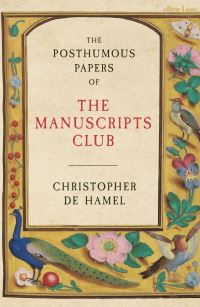
The illuminated manuscripts of the Middle Ages are among the greatest works of European art and literature. We are dazzled by them and recognize their crucial role in the transmission of knowledge. But we generally think much less about the countless men and women who made, collected and preserved them through the centuries, and to whom they owe their existence. This work describes some of the extraordinary people who have spent their lives among illuminated manuscripts over the last thousand years.
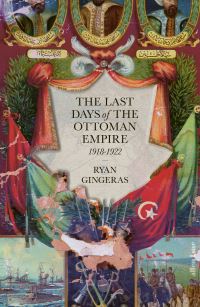
The Ottoman Empire had been one of the major facts in European history since the Middle Ages. By 1914 it had been much reduced, but still remained after Russia the largest European state. Stretching from the Adriatic to the Indian Ocean, the Empire was both a great political entity and a religious one, with the Sultan ruling over the Holy Sites and, as Caliph, the successor to Mohammed. Yet the Empire’s fateful decision to support Germany and Austria-Hungary in 1914, despite its successfully defending itself for much of the war, doomed it to disaster, breaking it up into a series of European colonies and what emerged as an independent Saudi Arabia. Ryan Gingeras explains how these epochal events came about and shows how much we still live in the shadow of decisions taken so long ago.
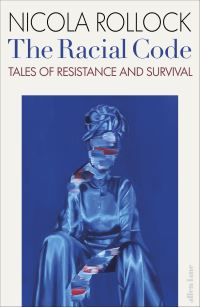
Miles, a successful lawyer, is mistaken for the waiter at a networking event. Femi is on the verge of breakdown having been consistently overlooked for promotion at her university. Nigel’s emails, repeatedly expressing concern about his employer’s forthcoming slavery exhibition, are ignored. Carol knows she can’t let herself relax at the work Christmas party. This is racism. It is not about the overt acts of random people at the fringes of society. It’s about the everyday. It’s the loaded silence, the throwaway remark, the casual comment or a ‘joke’ in the workplace. It’s everything. ‘The Racial Code’ is a examination of the hidden rules of race and racism that govern our lives and how they maintain the status quo.
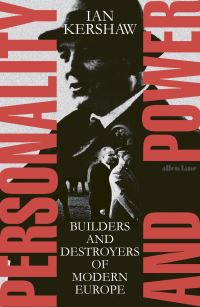
The modern era saw the emergence of individuals who had command over a terrifying array of instruments of control, persuasion and death. Whole societies were re-shaped and wars fought, often with a merciless contempt for the most basic norms. At the summit of these societies were leaders whose personalities had somehow given them the ability to do whatever they wished. Ian Kershaw’s book is a compelling, lucid and challenging attempt to understand these rulers, whether operating on the widest stage (Lenin, Stalin, Hitler, Mussolini) or with a more national impact (Tito, Franco). What was it about these leaders and the times they lived in that allowed them such untrammelled and murderous power? And what brought that era to an end?
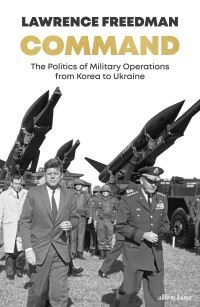
Throughout history, the concept of command – as both a way to achieve objectives and as an assertion of authority – has been essential to military action and leadership. But, as Sir Lawrence Freedman shows, it is also deeply political. Military command has been reconstructed and revolutionized since the Second World War by nuclear warfare, small-scale guerrilla land operations and cyber interference. Freedman takes a global perspective, systematically investigating its practice and politics since 1945 through a wide range of conflicts from the French Colonial Wars, the Cuban Missile Crisis and the Bangladesh Liberation War to North Vietnam’s Easter Offensive of 1972, the Falklands War, the Iraq War and Russia’s wars in Chechnya and Ukraine.
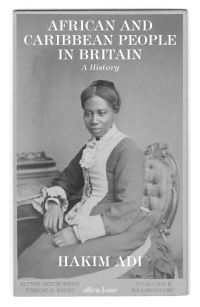
Despite the best efforts of researchers and campaigners, there remains today a steadfast tendency to reduce the history of African and Caribbean people in Britain to a simple story: it is one that begins in 1948 with the arrival of a single ship, the Empire Windrush, and continues mostly apart from a distinct British history, overlapping only on occasion amid grotesque injustice or pioneering protest. Yet, as acclaimed historian Hakim Adi demonstrates, from the very beginning, from the moment humans first stood on this rainy isle, there have been African and Caribbean men and women set at Britain’s heart.
No products in the basket.
Notifications