Showing 61–72 of 174 resultsSorted by latest
-
£20.00
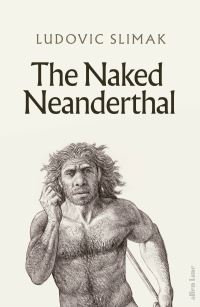
What do we really know about our cousins, the Neanderthals? For over a century we saw Neanderthals as inferior to Homo Sapiens. More recently, the pendulum swung the other way and they are generally seen as our relatives – not quite human, but similar enough, and still not equal. Now, thanks to an ongoing revolution in palaeoanthropology in which he has played a key part, Ludovic Slimak shows us that they are something altogether different – and they should be understood on their own terms rather than by comparing them to ourselves. As he reveals in this book, the Neanderthals had their own history, their own rituals, their own customs. Their own intelligence, very different from ours. Slimak has travelled around the world for the past thirty years to uncover who the Neanderthals really were.
-
£25.00
When Naomi Klein discovered that a woman who shared her first name, but had radically different, harmful views, was getting chronically mistaken for her, it seemed too ridiculous to take seriously. Then suddenly it wasn’t. She started to find herself grappling with a distorted sense of reality, becoming obsessed with reading the threats on social media, the endlessly scrolling insults from the followers of her doppelganger. Why had her shadowy other gone down such an extreme path? Why was identity – all we have to meet the world – so unstable? To find out, Klein decided to follow her double into a bizarre, uncanny mirror world: one of conspiracy theories, anti-vaxxers and demagogue hucksters, where soft-focus wellness influencers make common cause with fire-breathing far right propagandists (all in the name of protecting ‘the children’).
-
£20.00
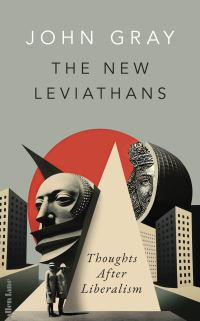
Ever since its publication in 1651, Thomas Hobbes’ Leviathan has unsettled and challenged how we understand the world. Condemned and vilified by each new generation, Hobbes’ cold political vision continues to see through any number of political and ethical vanities. In his stimulating book ‘The New Leviathans’, John Gray allows us to understand the world of the 2020s with all its contradictions, moral horrors and disappointments through a new reading of Hobbes’ classic work.
-
£25.00
The year is 1933. Hannah Arendt escapes Berlin, seeking refuge among the stateless gathering in Paris. Simone de Beauvoir reimagines the dance between consciousness and the world outside in a Rouen café. Ayn Rand labours in Hollywood exile on the novel she believes destined to reignite the flame of liberty in her adoptive nation. Simone Weil, disenchanted with the revolution’s course in Russia, devotes her entire being to the plight of the oppressed. ‘The Visionaries’ follows in its protagonists’ footsteps from Leningrad to New York, Spain at civil war to France under occupation, as each is uprooted by totalitarianism’s ascendence.
-
£40.00
‘Europe and the Roma’ describes the ‘fascination and fear’ which have marked Europeans’ response to the Romani presence. Countless composers, artists and writers have responded to Romani culture and to fantasies thereof. Their projections onto a group whose illiteracy and marginalization gave it so little direct voice of its own has always been a very uneasy mixture of the inspired, the patronizing and the frighteningly ignorant. But it also shows the link between cultural violence, social discrimination and racist policies that paved the way for the genocide of the Roma.
-
£40.00
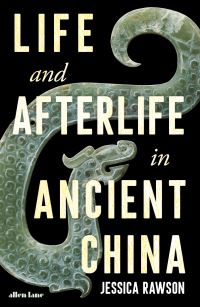
The three millennia up to the establishment of the first imperial Qin dynasty in 221 BC cemented many of the distinctive elements of Chinese civilisation which are still in place today. Records of these early achievements, and their diverse and unexpected expressions, often lie not in written history, but in how people marked the end of their lives: their dwellings for the afterlife. Beautifully illustrated and drawing on the latest archaeological discoveries, ‘Life and Afterlife in Ancient China’ shows how the tombs form a mosaic of one of the oldest civilisations in the world.
-
£25.00
Few images more shocked the French population during the Occupation than the photograph of Marshal Philippe Pétain – the great French hero of the First World War – shaking the hand of Hitler on 20th October 1940. In the radio speech after this meeting, Pétain said ‘It is I alone who will be judged by History.’ Five years later, in July 1945, the hour of judegment – if not yet the judgement of history – arrived. Pétain was brought before a specially created High Court to answer for his conduct between the signing of the armistice with Germany in June 1940 and the Liberation of France in August 1944. Julian Jackson uses Pétain’s three-week trial as a lens through which to examine the central crisis of twentieth-century French history.
-
£1,500.00
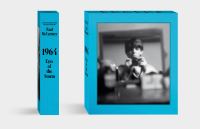
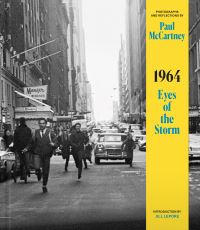
In 2020, an extraordinary trove of nearly a thousand photographs taken by Paul McCartney on a 35mm camera was re-discovered in his archive. They intimately record the months towards the end of 1963 and beginning of 1964 when Beatlemania erupted in the UK and, after the band’s first visit to the USA, they became the most famous people on the planet. The photographs are McCartney’s personal record of this explosive time, when he was, as he puts it, in the ‘Eyes of the Storm’. ‘1964’ presents 275 of McCartney’s photographs from the six cities of these intense, legendary months – Liverpool, London, Paris, New York, Washington, D.C., and Miami – and many never-before-seen portraits of John, George, and Ringo.
-
£60.00
In 2020, an extraordinary trove of nearly a thousand photographs taken by Paul McCartney on a 35mm camera was re-discovered in his archive. They intimately record the months towards the end of 1963 and beginning of 1964 when Beatlemania erupted in the UK and, after the band’s first visit to the USA, they became the most famous people on the planet. The photographs are McCartney’s personal record of this explosive time, when he was, as he puts it, in the ‘Eyes of the Storm’. ‘1964’ presents 275 of McCartney’s photographs from the six cities of these intense, legendary months – Liverpool, London, Paris, New York, Washington, D.C., and Miami – and many never-before-seen portraits of John, George, and Ringo.
-
£25.00
A brilliant new theory of how society works from one of the most iconoclastic thinkers of our time.
-
£30.00
Less than a month after it marched into France in summer 1870, the Prussian army had devastated its opponents, captured Napoleon III and wrecked all assumptions about Europe’s pecking order. Other countries looked on in helpless amazement. Pushing aside further French resistance, a new German Empire was proclaimed (as a deliberate humiliation) in the Palace of Versailles, leaving the French to face civil war in Paris, reparations and the loss of Alsace and Lorraine. ‘Bismarck’s War’ tells the story of one of the most shocking reversals of fortune in modern European history. The culmination of a globally violent decade, the Franco-Prussian War was deliberately engineered by Bismarck, both to destroy French power and to unite Germany. It could not have worked better, but it also had lurking inside it the poisonous seeds of all the disasters that would ravage the twentieth century.
-
£20.00
Over the last three centuries, the West rose to dominate the planet. Then, suddenly, around the turn of the millennium, history reversed. Faced with economic stagnation and internal political division, the West has found itself in rapid decline. But this is not the first time the global order has witnessed such a dramatic rise and fall. The Roman Empire followed a similar arc from dizzying power to disintegration – a fact that is more than a strange historical coincidence. In ‘Why Empires Fall’, Peter Heather and John Rapley use this Roman past to think anew about the contemporary West, its state of crisis, and what paths we could take out of it.