Showing 25–36 of 44 resultsSorted by latest
-
£10.99
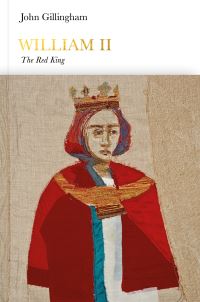
William II (1087-1100), or William Rufus, will always be most famous for his death: killed by an arrow while out hunting, perhaps through accident or perhaps murder. But, as John Gillingham makes clear in this book, as the son and successor to William the Conqueror it was William Rufus who had to establish permanent Norman rule. A ruthless, irascible man, he frequently argued acrimoniously with his older brother Robert over their father’s inheritance – but he also handed out effective justice, leaving as his legacy one of the most extraordinary of all medieval buildings, Westminster Hall.
-
£10.99
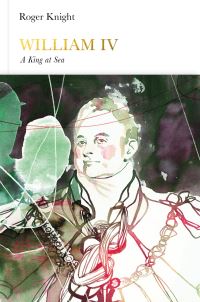
William IV, ‘the Sailor King’, is best known for his naval career and for living for twenty years with the actress Mrs Jordan, with whom he had ten children. Knight’s book shows that William was pretty much a disaster in whatever field he found himself.
-
£10.99
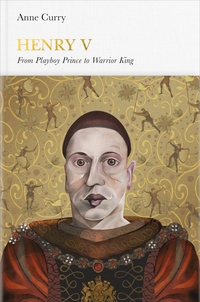
Anne Curry explores how Henry’s hyperactive efforts to expunge his past failures, and his experience of crisis – which threatened to ruin everything he had struggled to achieve – defined his kingship, and how his astonishing success at Agincourt transformed his standing in the eyes of his contemporaries, and of all generations to come.
-
£10.99
Known as ‘the anarchy’, the reign of Stephen (1135-1141) saw England plunged into a civil war that illuminated the fatal flaw in the powerful Norman monarchy, that without clear rules ordering succession, conflict between members of William the Conqueror’s family were inevitable. But there was another problem, too: Stephen himself. With the nobility of England and Normandy anxious about the prospect of a world without the tough love of the old king Henry I, Stephen styled himself a political panacea, promising strength without oppression.
-
£10.99
Just as this book is being published, Elizabeth II will become the longest serving monarch who ever sat on the English or British throne. Yet her personality and influence remain elusive. This book, by a senior politician who has spent significant periods of time in her company, and is also a distinguished historian, portrays her more credibly than any other yet published.
-
£10.99
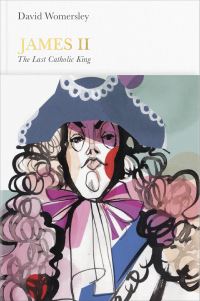
The short, action-packed reign of James II (1685-88) is generally seen as one of the most catastrophic in British history. James managed, despite having access to tremendous reserves of good will and deference, to so alienate his supporters that he had to flee for his life. And yet, most of that life was spent not as king but first as heir to Charles II, as Duke of York (after whom New York is named) and then in the last part of his life as the first Jacobite ‘pretender’, starting a problem that would haunt Britain’s rulers for generations.
-
£10.99
Queen Victoria inherited the throne at 18 and went on to become the longest-reigning female monarch in history, in a time of intense industrial, cultural, political, scientific and military change within the United Kingdom and great imperial expansion outside of it (she was made Empress of India in 1876). Overturning the established picture of the dour old lady, this is a fresh and engaging portrait from one of our most talented royal biographers.
-
£10.99
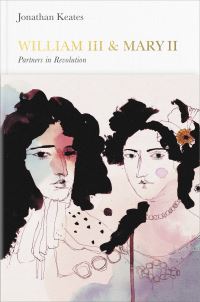
William III (1689-1702) and Mary II (1689-94) were Britain’s only ever joint monarchs. They changed the course of the entire country’s history, coming to power through a coup (which involved Mary betraying her own father), reestablishing parliament on a new footing and, through commiting Britain to fighting France, initiating an immensely long period of warfare and colonial expansion. Jonathan Keates’ book makes both monarchs vivid, the cold, shrewd ‘Dutch’ William and the shortlived Mary, whose life and death inspired Purcell to write some of his greatest music.
-
£10.99
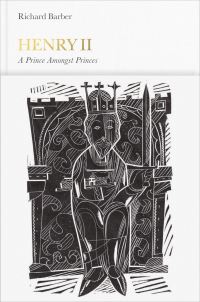
Through a series of astonishing dynastic coups, Henry II (1154-89) became the ruler of an enormous European empire. One of the most dynamic, restless and clever men ever to rule England, he was brought down both by his catastrophic relationship with his archbishop Thomas Becket and his debilitating arguments with his sons, most importantly the future Richard I and King John. His empire may have ultimately collapsed, but in Richard Barber’s vivid and sympathetic account the reader can see why Henry II left such a compelling impression on his contemporaries.
-
£25.00
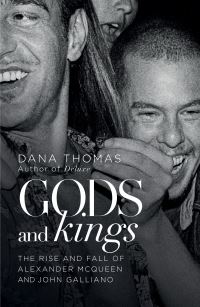
In the first decade of the 21st century, the fashion world was dominated by two very different but equally successful – and turbulent – figures. But then, within 12 months, Alexander McQueen had committed suicide, and John Galliano’s career had unravelled in public after he was arrested for an anti-Semitic tirade at a Paris bar. Dana Thomas uses the story of these two charismatic figures to look behind the closed doors of the notoriously secretive fashion world.
-
£20.00
John Hooper presents the ideal companion for anyone seeking to understand contemporary Italy and the unique character of the Italians. Digging deep into their history, culture and religion, he offers keys to assessing everything from their bewildering politics to their love of life and beauty.
-
£10.99
If Ethelred was notoriously ‘Unready’ and Alfred ‘Great’, King George VI should bear the designation of ‘George the Dutiful’. Throughout his life he dedicated himself to the pursuit of what he thought he ought to be doing rather than what he wanted to do. Inarticulate and loathing any sort of public appearances, he accepted that it was his destiny to figure regularly and conspicuously in the public eye, gritted his teeth, largely conquered his crippling stammer and got on with it. He was not born to be king, but he made an admirable one, and was the figurehead of the nation at the time of its greatest trial, during the Second World War. This is an enjoyable book about him.