Showing 145–156 of 174 resultsSorted by latest
-
£25.00
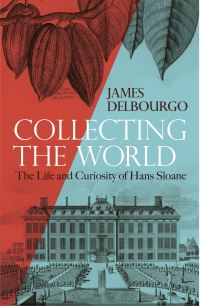
Hans Sloane was a young doctor from Northern Ireland who made his way in London and eventually become physician to the king and much of London society. In his youth he made a defining visit to Jamaica, where he began collecting ‘curiosities’ of all kinds. He eventually became the centre of a worldwide network which allowed him to assemble the collections which became the core of the British Museum, the Natural History Museum, and the British Library. This is the first major biography of Sloane in 60 years. It explores not just the impact of an extraordinary man, but allows us a window onto the moment when the meaning of collections and collecting changed.
-
£20.00
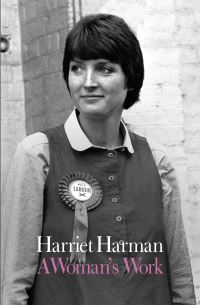
The first time the story of women’s progressive politics over the past 30 years has been told – by someone at the forefront of the movement. Why does the political representation of women matter? And which hurdles – personal, political and societal – have been faced, fought and sometimes overcome in the past 30 years? From campaigning with small children to increasing the number of women in Parliament, bringing women’s issues to the heart of the Labour Party and tackling a parliamentary culture with no consideration for family life, this frank, inspiring and politically charged book is a crucial account of the progress (and occasional setbacks) made in fighting to change the Labour Party, UK politics and the way the country has been governed since the 1970s.
-
£20.00
In this eye-opening exploration of the human weaknesses for power, Daniel Levin takes us on a hilarious journey through the absurd world of our global elites, drawing unforgettable sketches of some of the puppets who stand guard, and the jugglers and conjurers employed within.
-
£16.99
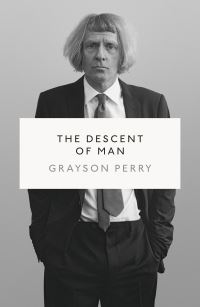
What is masculinity and what can it become? It might seem like a luxury in a world facing climate change and vast imbalances in global wealth, but Grayson Perry sees masculinity as a highly active component in all the big issues. Tracing the contours of the dominant male role today, its history and its clearly defined rules, he explores everything from sex, seriousness and intimidation to clothing, childhood and power, providing a more modern model of manhood which may reach escape velocity from the gravity of traditional man.
-
£9.99
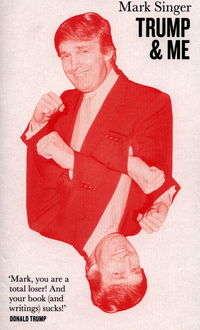
In 1996, New Yorker writer Mark Singer was conscripted by his editor to profile Donald Trump, at a time when the Republican frontrunner was just a Manhattan-centric megalomaniac and failing casino operator mired in his second divorce. Since then, Trump has become a serious candidate in the US presidential race, an unlikely tribune of populist rage that has resulted in a mass political movement only loosely tethered to reality. Yet Singer’s droll and precise profile has lodged inside Trump’s head as a continuing irritant – and it’s not hard to see why. In ‘Trump and Me’, Singer revisits his former subject and outlines his evolution from swaggering buffoon to Republican nominee in one of the most bizarre and alarming elections in American history.
-
£12.99
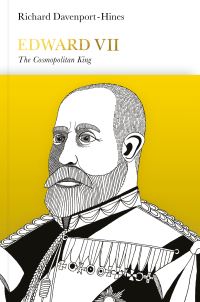
Like his mother Queen Victoria, Edward VII defined an era. Both reflected the personalties of their central figures: hers grand, imperial and pretty stiff; his no less grand, but much more relaxed and enjoyable. This book conveys Edward’s distinct personality and significant influences. To the despair of his parents, he rebelled as a young man, conducting many affairs and living a life of pleasure. But as king he made a distinct contribution to European diplomacy and – which is little known – to London, laying out the Mall and Admiralty Arch.
-
£30.00
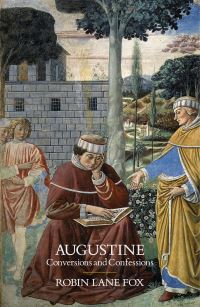
Augustine’s masterpiece, the ‘Confessions’, is a classic study of anguish, hesitation and what he believes to be God’s intervention. It has inspired philosophers, Christian thinkers and monastic followers, but still leaves readers wondering why exactly he chose to compose a work which was like none before it. This study follows him on a brilliantly described journey through his various conversions and their sequels. It combines the latest scholarship with recently found letters and sermons by Augustine himself to give a portrait of the man and his times which is subtly different from older biographies.
-
£30.00
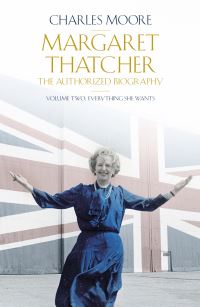
Margaret Thatcher was the longest-serving Prime Minister of the 20th century and one of the most influential figures of the postwar era. Volume two of Moore’s acclaimed biography covers the central, triumphal years of her premiership, from the Falklands to the 1987 election. Based on unrestricted access to all Lady Thatcher’s papers, unpublished interviews with her and all her major colleagues, this is the indispensable portrait of a towering figure of our times.
-
£30.00
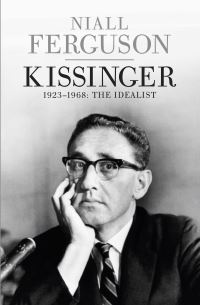
No American statesman has been as revered and as reviled as Henry Kissinger. Hailed by some as the ‘indispensable man’, whose advice has been sought by every president from Kennedy to Obama, Kissinger has also attracted immense hostility from critics who have cast him as an amoral Machiavellian – the ultimate cold-blooded ‘realist’. Niall Ferguson has created an extraordinary panorama of Kissinger’s world, and a paradigm-shifting reappraisal of the man. Only through knowledge of Kissinger’s early life can we understand his debt to the philosophy of idealism. And only by tracing his rise, fall and revival as an adviser to John F. Kennedy, Nelson Rockefeller and, finally, Richard Nixon can we appreciate the magnitude of his contribution to the theory of diplomacy, grand strategy and nuclear deterrence.
-
£30.00
Frederick the Great, King of Prussia, dominated the 18th century in the same way that Napoleon dominated the start of the 19th – a force of nature, a caustic, ruthless, brilliant military commander, a monarch of exceptional energy and talent, and a knowledgeable patron of artists, architects and writers, most famously Voltaire. From early in his reign he was already a legendary figure – fascinating even to those who hated him. Tim Blanning’s biography recreates a remarkable era, a world which would be swept away shortly after Frederick’s death by the French Revolution. Equally at home on the battlefield or in the music room at Frederick’s extraordinary miniature palace of Sanssouci, Blanning draws on a lifetime’s obsession with the 18th century to create a work that is in many ways the summation of all that he has learned in his own rich and various career.
-
£10.99
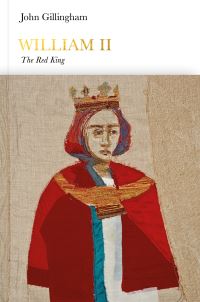
William II (1087-1100), or William Rufus, will always be most famous for his death: killed by an arrow while out hunting, perhaps through accident or perhaps murder. But, as John Gillingham makes clear in this book, as the son and successor to William the Conqueror it was William Rufus who had to establish permanent Norman rule. A ruthless, irascible man, he frequently argued acrimoniously with his older brother Robert over their father’s inheritance – but he also handed out effective justice, leaving as his legacy one of the most extraordinary of all medieval buildings, Westminster Hall.
-
£10.99
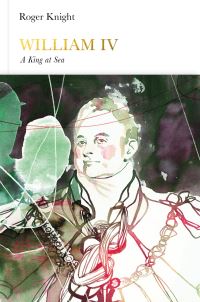
William IV, ‘the Sailor King’, is best known for his naval career and for living for twenty years with the actress Mrs Jordan, with whom he had ten children. Knight’s book shows that William was pretty much a disaster in whatever field he found himself.