Showing 109–120 of 167 resultsSorted by latest
-
£25.00
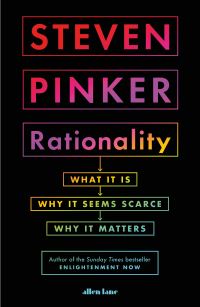
In the 21st century, humanity is reaching new heights of scientific understanding Рand at the same time appears to be losing its mind. How can a species that discovered vaccines for Covid-19 in less than a year produce so much fake news, quack cures and conspiracy theorising? In this book, Steven Pinker rejects the cynical clich̩ that humans are simply an irrational species Рcavemen out of time fatally cursed with biases, fallacies and illusions. After all, we discovered the laws of nature, lengthened and enriched our lives and set the benchmarks for rationality itself. Instead, he explains, we think in ways that suit the low-tech contexts in which we spend most of our lives, but fail to take advantage of the powerful tools of reasoning we have built up over millennia: logic, critical thinking, probability, causal inference, and decision-making under uncertainty.
-
£25.00
The 1st of May 1945. The world did not know it yet, but the final week of the Third Reich’s existence had begun. Hitler was dead, but the war had still not ended. Everything had both ground to a halt and yet remained agonizingly uncertain. Volker Ullrich’s remarkable book takes the reader into a world torn between hope and terror, violence and peace. Ullrich describes how each day unfolds, with Germany now under a new Führer, Admiral Dönitz, based improbably in the small Baltic town of Flensburg. With Hitler dead, Berlin in ruins and the war undoubtedly lost, the process by which the fighting would end remained horrifyingly unclear.
-
£25.00
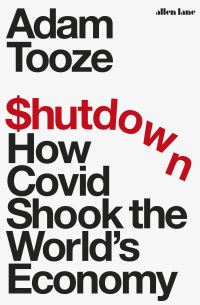
When the news first began to trickle out of China about a new virus in December 2019, risk-averse financial markets were alert to its potential for disruption. Yet they could never have predicted the total economic collapse that would follow, as stock markets fell faster and harder than at any time since 1929, currencies across the world plunged, investors panicked, and even gold was sold. In a matter of weeks, the world’s economy was brought to an abrupt halt. Flights were grounded; supply chains broken; industries from tourism to oil to hospitality collapsed overnight. Central banks responded with unprecedented interventions, just to keep their economies on life-support. The pandemic struck the three great global economic hubs – China, Europe and the United States. This book tells the story of that shutdown. We do not yet know how this story ends, or what new world we will find on the other side.
-
£25.00
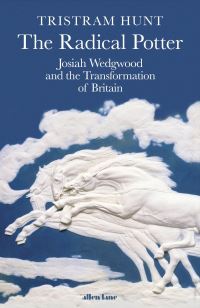
Josiah Wedgwood, perhaps the greatest English potter who ever lived, epitomized the best of his age. From his kilns and workshops in Stoke-on-Trent, he revolutionized the production of ceramics in Georgian Britain by marrying technology with design, manufacturing efficiency and retail flair. He transformed the luxury markets not only of London, Liverpool, Bath and Dublin but of America and the world, and helping to usher in a mass consumer society. Tristram Hunt calls him ‘the Steve Jobs of the eighteenth century’. But Wedgwood was radical in his mind and politics as well as in his designs. He campaigned for free trade and religious toleration, read pioneering papers to the Royal Society and was a member of the celebrated Lunar Society of Birmingham.
-
£40.00
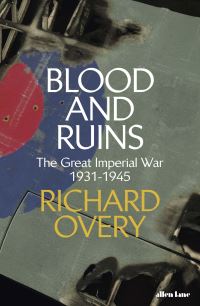
Richard Overy sets out to recast the way in which we view the Second World War and its origins and aftermath. He argues that this was the ‘great imperial war’, a violent end to almost a century of global imperial expansion which reached its peak in the ambitions of Italy, Germany and Japan in the 1930s and early 1940s, before descending into the largest and costliest war in human history and the end, after 1945, of all territorial empires. How war on a huge scale was fought, supplied, paid for, supported by mass mobilization and morally justified forms the heart of this account. Above all, Overy explains the bitter cost for those involved in fighting, and the exceptional level of crime and atrocity that marked these imperial projects, the war and its aftermath. This war was as deadly for civilians as it was for the military, a war to the death over the future of the global order.
-
£20.00
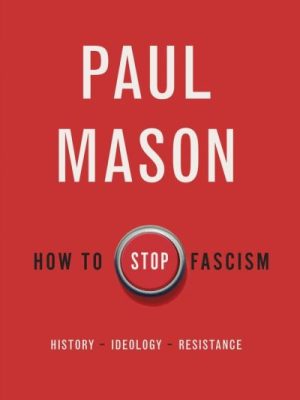
The far right is on the rise across the world. From Modi’s India to Bolsonaro’s Brazil and Erdogan’s Turkey, fascism is not a horror that we have left in the past; it is a recurring nightmare that is happening again – and we need to find a better way to fight it. Paul Mason offers a radical, hopeful blueprint for resisting and defeating the new far right. The book is both a chilling portrait of contemporary fascism, and a compelling history of the fascist phenomenon: its psychological roots, political theories and genocidal logic.
-
£25.00
For half the sixteenth century, Antwerp was the place for breaking rules – religious, sexual, intellectual. Then things changed. One man cornered all the money in the city and reinvented ideas of what money meant. Another gave Antwerp a new shape purely out of his own ambition. Jews fleeing the Portuguese Inquisition needed Antwerp for their escape, thanks to the remarkable woman at the head of the grandest banking family in Europe. But when Antwerp rebelled with the Dutch against the Spanish and lost, all that glory was buried and its true history rewritten. The city that unsettled so many now became conformist. Mutinous troops burned the city records. Michael Pye sets out to rediscover the city that was lost and bring its wilder days to life using every kind of clue: novels, paintings, songs, schoolbooks, letters and the archives of Venice, London and the Medici.
-
£25.00
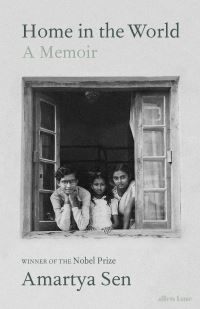
Where is ‘home’? For Amartya Sen home has been many places – Dhaka in modern Bangladesh where he grew up, the village of Santiniketan where he was raised by his grandparents as much as by his parents, Calcutta where he first studied economics and was active in student movements, and Trinity College, Cambridge, to which he came aged nineteen. Sen brilliantly recreates the atmosphere in each of these. Central to his formation was the intellectually liberating school in Santiniketan founded by Rabindranath Tagore (who gave him his name Amartya) and enticing conversations in the famous Coffee House on College Street in Calcutta. As an undergraduate at Cambridge, he engaged with many of the leading figures of the day. This is a book of ideas as much as of people and places.
-
£17.99
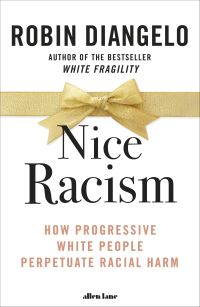
Racism will not be interrupted by a hug or a smile. Dismantling white supremacy requires white people to commit to a lifetime of education and accountability. Continuing the work she began in ‘White Fragility’, Robin DiAngelo challenges white readers to rethink their ideas about racism and to confront their role in maintaining it. The common moves white progressives make to telegraph their niceness are: avoiding social discomfort, focusing on connections and commonalities, privileging concern for the feelings of perpetrators of racism over the victims, elevating intentions over impact, and credentialing. Writing candidly about her own missteps and struggles, and drawing on over 20 years working as an anti-racist educator, ‘Nice Racists’ models a path forward, helping white readers to face their complicity and embrace humility.
-
£20.00
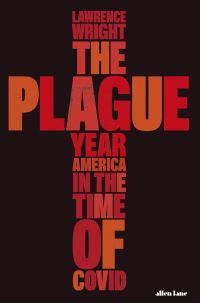
The story starts with the initial moments of Covid’s appearance in Wuhan and ends with Joseph Biden’s inauguration in an America ravaged by well over 400,000 deaths – a mortality already some ten times worse than US combat deaths in the entire Vietnam War. This is an anguished, furious memorial to a year in which all of America’s great strengths – its scientific knowledge, its great civic and intellectual institutions, its spirit of voluntarism and community – were brought low not by a terrifying new illness alone, but by political incompetence and cynicism on a scale for which there has been no precedent. With insight, sympathy, clarity and rage, ‘The Plague Year’ follows the unfolding of this great tragedy, talking with individuals on the frontline, bringing together many moving and surprising stories and painting a devastating picture of a country literally and fatally misled.
-
£25.00
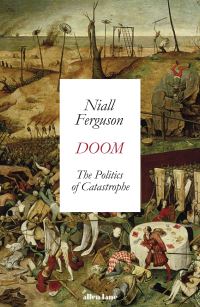
Disasters are by their very nature hard to predict. Pandemics, like earthquakes, wildfires, financial crises and wars, are not normally distributed; there is no cycle of history to help us anticipate the next catastrophe. But when disaster strikes, we ought to be better prepared than the Romans were when Vesuvius erupted or medieval Italians when the Black Death struck. We have science on our side, after all. Yet the responses of a number of developed countries to a new pathogen from China were badly bungled. Why? The facile answer is to blame poor leadership. While populist rulers have performed poorly in the face of the pandemic, more profund problems have been exposed by COVID-19. Only when we understand the central challenge posed by disaster in history can we see that this was also a failure of an administrative state and of economic elites that had grown myopic over much longer than just a few years.
-
£20.00
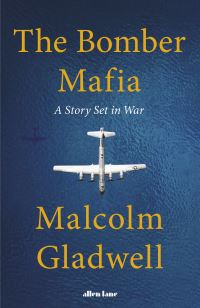
Here is a riveting tale of persistence, innovation, and the incalculable wages of war. Most military thinkers in the years leading up to World War II saw the airplane as an afterthought. But a small band of idealistic strategists had a different view. This ‘Bomber Mafia’ asked: What if precision bombing could, just by taking out critical choke points – industrial or transportation hubs – cripple the enemy and make war far less lethal? In ‘The Bomber Mafia’, Gladwell delves deep into questions of how technology and best intentions collide in the heat of war.