Showing 1–16 of 33 resultsSorted by latest
-
£20.00
What can we really know about the world around us? With clarity and lightness, physicist Carlo Rovelli guides us through the speculative depths of modern physics, unafraid to test their limits, not least because, as he suggests, there may be no final ground to reach. Electrons and minds, stones and laws, judgements and galaxies are not essentially different in nature from one another. They are ideas that illuminate each other. Reality, he shows, is shaped by this continuous play of reflections. From this emerges Rovelli’s central insight: the equality of all things. Like the ancient Chinese philosopher Zhuangzi, who dreams he is a butterfly and wakes unsure whether he is Zhuangzi dreaming to be a butterfly or a butterfly dreaming to be Zhuangzi, Rovelli invites us to see reality anew, recognizing our knowledge is coherent but also uncertain and circular.
-
£25.00
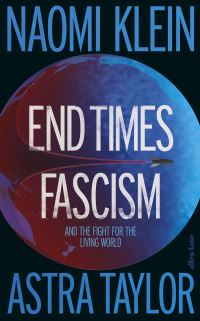
The far right is on the march again – but this time it’s different from anything we’ve seen before. A new, apocalyptic alliance of religious fundamentalists, billionaire Silicon Valley tech kings and ethno-nationalists is on the move. They’re united in their belief that some kind of cleansing cataclysm is coming, and they welcome a future of shocks, scarcity and collapse, convinced they’ll be among the saved on the other side. In this blistering reckoning with our age, Naomi Klein and Astra Taylor take us deep into this man-made Armageddon complex – and show us how to resist it. Around the globe, they investigate how those who are making our world unliveable through climate chaos and job-consuming AI are preparing to protect themselves from the fallout, whether it’s by repairing to luxurious private islands for the super-rich, rocketing off to Mars or bunkering nations against a dehumanized ‘other’.
-
£20.00
What should the next generation learn – and what should they stop worrying about – in a world transformed by artificial intelligence? AI is rewriting the rules in the classroom, the job market and the workplace, leaving parents, teachers, students and all types of workers unsure about how best to prepare for what lies ahead. In this work, globally renowned economist Daniel Susskind cuts through the outdated advice to show us what young people actually need to succeed now.
-
£25.00
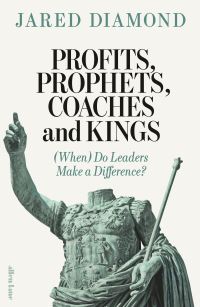
We often read history as the biographies of ‘great men’ who shaped the world. But are leaders, whichever field they are in, really that influential? Should CEOs be given large bonuses when a company performs well? Why, when a political leader is assassinated, is their successor as likely to improve as damage a country? When do we know if firing a coach has changed the fortunes of the team? Historian and bestselling author Jared Diamond argues that leaders are neither heroic exceptions nor products of circumstance. Looking at four difference spheres: history, business, sport and religion, Diamond asks under which conditions is a leader most likely to make a difference and why. Drawing on the life and career of iconic leaders, Diamond shows us how leadership effectiveness is determined by a range of complex interrelated factors, from resources to geography, culture to technology.
-
£25.00
Tom Overton got to know John Berger around 2010, after he gave his archive to the British Library: a kind of homecoming to the city of his birth, after a life lived mostly in self-imposed exile in Switzerland and France. Curious about the origin of a piece of writing or art, Tom would scan something in and email it. Then there’d come a call, very early, very late. ‘Hello? Is that Tom? This is John. John Berger. Can I tell you a story?’ Tom realised he was bringing this archive back into John’s life, peering together through holes in time, remembering things he couldn’t himself. And then, at the beginning of 2017, John died. In this book, Overton explores the life and work of one of the great cultural figures of the last century, who came of age in a world threatened by nuclear apocalypse, and grew old in a world dominated by the idea that human life should be ordered with the logic of profit, always looking forward, never back.
-
£25.00
We live in the age of data. Over the past century, rapidly evolving technologies have transformed every aspect of our society, in troubling and seemingly unstoppable ways. Political campaigns have been reduced to attention-mining algorithms, multinational corporations control public discourse, and the era of the liberal nation-state seems to be coming to an end, replaced by the rule of artificial intelligence. Today, power is maintained through mystification: machines, we are told, know what humans cannot. Yet nothing about any of this was, or is, inevitable. In this account of how technology has corroded democracy around the world, prizewinning historian Jill Lepore traces the rise and fall of what she calls the ‘Artificial State’.
-
£22.00
Two friends meet in an art gallery after decades of silence. The idealism that once bound them together fissured and fractured under the weight of collective and personal griefs. Through their memories of youthful certainty, the antagonism of their conversation and the embers of their enduring kinship, they navigate the wreckage of our world today – the hope, the anger and the exhaustion. In her most personal and emotionally resonant writing yet, Claudia Rankine blends narrative, memory and criticism in a poignant exploration of the beautiful but complicated friendships that we rely on to unsettle us, to make us better – exposing the fiction in the facts of our lives and demanding action in our time of relentless loss.
-
£25.00
There are few greater film lovers than David Thomson who, over fifty years, has built a reputation as one of the wisest and most penetrating voices on the art form. But every flicker of light has its shadow. In this profound reckoning, Thomson confronts the dark side of the movies – responsible for creating an alternate reality and fantasyland that has only deepened the isolation and disconnection of our society over the course of a century. Thomson explores the high and low points of film history with his usual brilliant insight – sharp and arresting readings of movies from Metropolis to Rear Window to The Godfather can be found in these pages. But he also shows the ways in which our love of voyeurism and villainy, and the passivity which the movies further engender, have led to a coarsening not just of a medium, but of the larger culture, including our political life.
-
£9.99
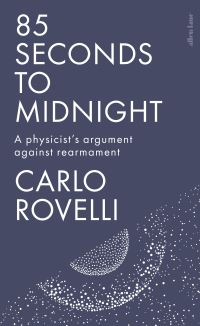
The world is re-arming and embroiled in endless conflict. The Doomsday Clock has now been set to 85 seconds to midnight, with the risk of nuclear war the highest it has ever been. Why do we always fail to learn from the past? In this urgent book, physicist Carlo Rovelli reframes the history of nuclear weapons: from how the atomic bomb was born to why Germany didn’t build it and why the US used it, to the narrowly averted disasters of the Cold War and the political brinkmanship careering out of control today. As he grapples with the legacy of his scientific forebears, Rovelli spotlights the true nature of the decisions being made by leaders around the world today.
-
£25.00
The crises that face us in the twenty-first century are global and interconnected: amongst many others, climate change exacerbates the water crisis, which in turn impacts health. Yet, as Mariana Mazzucato argues, we have failed to treat these as collective goals with shared agendas. This, she argues, is not by coincidence, but by design. In this ambitious and urgent new book, Mazzucato presents a systematic and scalable vision of successful government that creates value, addresses inequalities, and serves collective ends. Emphasizing a need to shift from reactively putting bandages on market failures to proactively shaping economies that actually work, she proposes a new economic theory of the common good. The book outlines five pillars of progressive government and demonstrates how they can help us tackle the most pressing challenges of our time.
-
£20.00
A tsunami of change, we are told, is sweeping the economy as robots and AI threaten to take over tasks done by humans. But while we worry that we’re robotizing our work, what if the real risk is that we’re robotizing ourselves? When prize-winning Financial Times journalist Sarah O’Connor set out to investigate what was happening on the front lines of technological change, she found people who weren’t losing their jobs to machines, but who felt they were losing something else instead. From translators forced to edit AI output to university graduates interviewed by software and warehouse workers surrounded by robots, she heard stories of work becoming lonelier, less creative, less human. But O’Connor also found hopeful stories of jobs being made better, safer and more enjoyable – where workers haven’t rejected the new tools, but instead have learned to control them.
-
£30.00
‘The Traveller’ spreads out before us the life and times of George Forster, who journeyed to the far reaches of the known world, and whose radical ideas about humanity, equality and freedom challenged the worldviews of 18th-century Europe. Andrea Wulf paints a picture of a man of profound curiosity and brilliance. He joined Cook’s second voyage at the age of 17, an exploration of vast contrasts from the icy world of Antarctica to tropical islands of the South Pacific. Studying the diverse nature, peoples and cultures he encountered, he came back imbued with a deep belief in the equality of races – an understanding far ahead of his time. On his return he was feted in England, France, Germany and Poland, using his fame to advocate for freedom and women’s rights and against empire, racism and slavery.
-
£25.00
The wealthy and powerful few have dominated the masses throughout most of human history. This is starkly visible now more than ever – today, the gulf between oligarchs and the average citizen is larger than any gap that existed during European serfdom or the slave society of Imperial Rome. We have arrived at the most blatant version of oligarchy that most modern states have endured, with politicians bought and paid for across the political spectrum. The strange thing is: we aren’t in open revolt against this system. In fact, we keep voting to prop it up. Why? In ‘The Blind Spot’, political scientist Jeffrey A. Winters delivers an urgent, incisive account of how we reached this era of in-your-face oligarchy, exposing how modern democracy was developed to protect the interests of the ultra-rich.
-
£30.00
Weimar looms large in German history: a crucible of democracy and dictatorship. This ancient town nestled in the heart of the country was home to some of Europe’s greatest thinkers, Goethe and Schiller, Liszt and Nietzsche among them. It gave its name to the ambitious Weimar Republic crafted in the aftermath of the First World War. But it was also where fascism took hold. Where Bauhaus architects first experimented with new ways of living, Buchenwald was dug out of a beech forest. This book shows us a town and its people on the edge of catastrophe. Drawing on a wealth of new archival research, historian Katja Hoyer takes us from 1919 to 1939 as she tells the stories of the men and women who lived through the new republic and Hitler’s regime. We encounter a vividly drawn cast of characters, from bookbinder Carl Weirich and hotel owners Rosa and Arthur Schmidt, to Friedrich Nietzsche’s sister Elisabeth.
-
£35.00
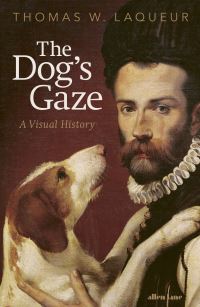
What do dogs do in art? Long before the phrase ‘man’s best friend’ became common parlance, dogs were already standing beside us in art as in life. In ‘The Dog’s Gaze’, the historian Thomas W. Laqueur invites us to explore why they feature more than any other animal in the ways in which we picture ourselves and our stories.
-
£25.00
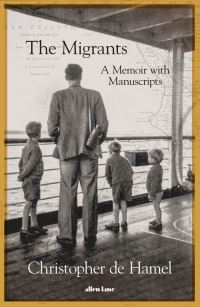
Christopher de Hamel is one of the world’s best-known scholars and writers on illuminated manuscripts. He was mostly brought up in the south of New Zealand, where his family moved when he was four. This book magically evokes a childhood at vast distance from Europe, recalling his thrill and wonder in first encountering medieval manuscripts in libraries there and the realization that they too are migrants far from home. ‘The Migrants’ explores the immense journeys of books and people. It is a tale of colonization and the migration of culture, of motives and idealism, triumphs and disasters, bringing us face-to-face with history.